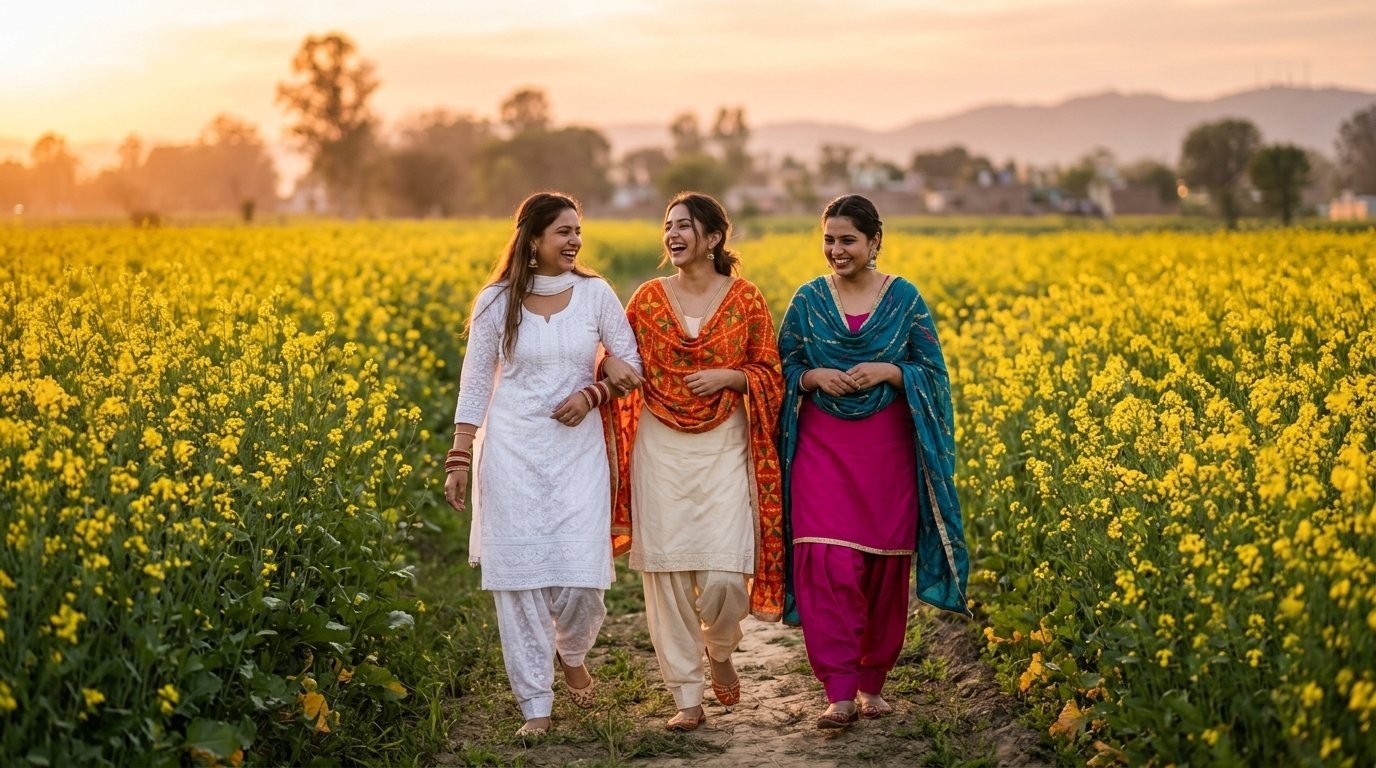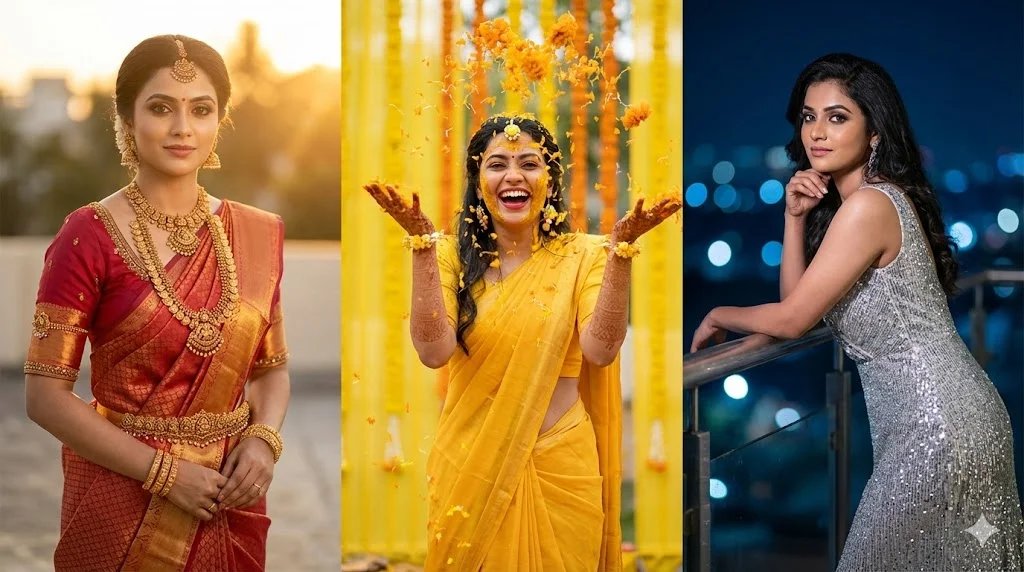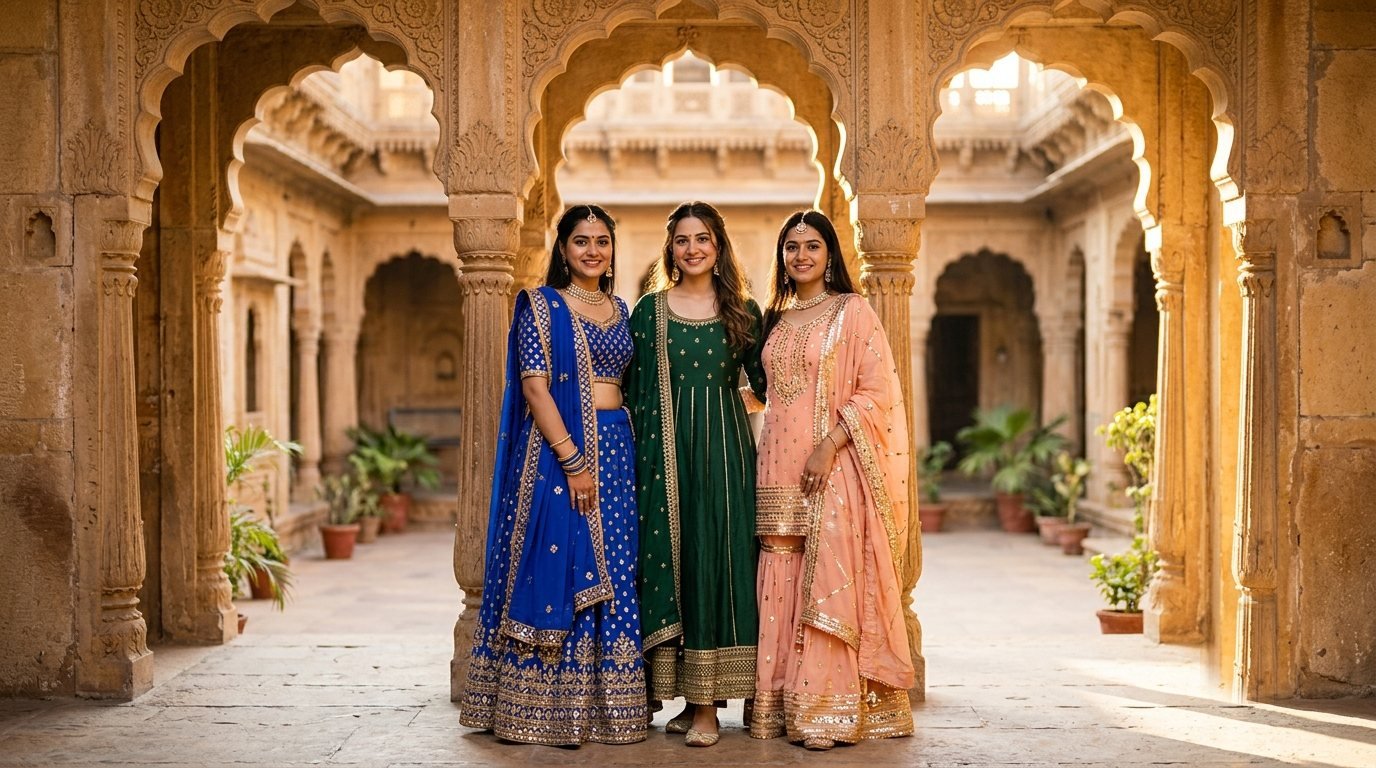
Most "traditional look" prompts stop at the saree. This page covers the rest of the Indian wardrobe: the lehenga for a sangeet, the anarkali, the sharara at a mehendi, the gharara for Eid, a Rajasthani poshak and a haldi look. These are the outfits girls actually ask for when they say "traditional look for girl", and they are the ones AI draws worst unless the garment is named exactly.
Every prompt below names the garment, the embroidery, the jewellery and the setting, so the result looks like a real festival photo rather than a generic costume. Each ends with a face-lock line, so the woman in the image still looks like you. For other garments, see our salwar suit prompts, the kurti look prompts or the best saree prompts for Gemini.
How to use these traditional look prompts
Upload one clear, front-facing photo first, then paste the prompt. They work as written in Gemini and ChatGPT.
- Use a sharp, well-lit reference. A blurry or filtered source photo is the main reason the face drifts.
- Keep the garment words. "Lehenga", "anarkali" and "sharara" are different cuts. The model only draws the right one if you name it.
- Change the colour, keep the craft. Swap royal blue for maroon freely, but leave the embroidery and jewellery terms in place.
- Ask for 4:5. Add "4:5 portrait" at the end so the image fills the Instagram feed.
Lehenga, anarkali and sharara prompts
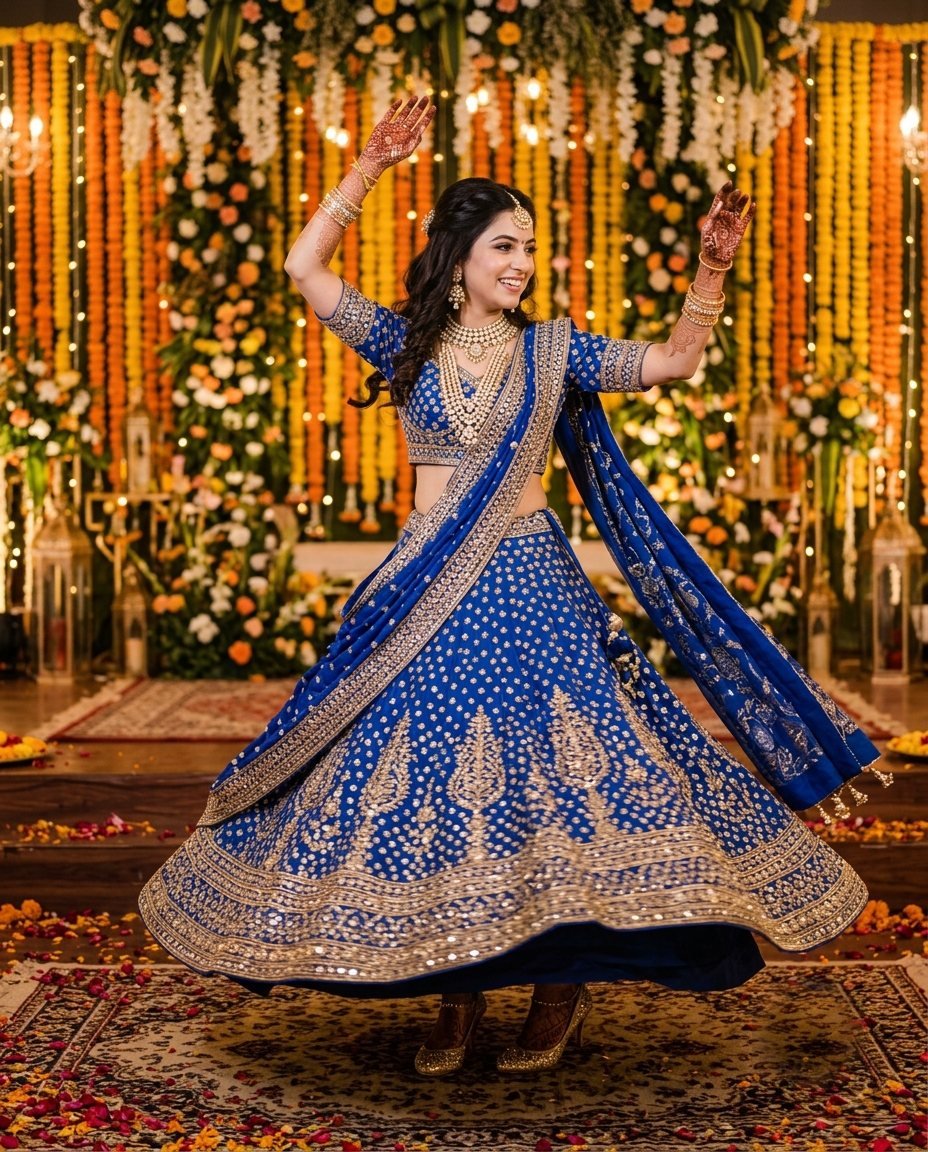
Using the uploaded photo as a character reference, recreate the woman standing on a flower-decorated sangeet stage in a royal-blue mirror-work lehenga choli with a heavily embroidered dupatta pinned on one shoulder, a layered kundan necklace, maang tikka and jhumkas, hair in soft curls with a side parting, hands lifted in a twirling pose so the skirt flares around her. Warm string lights and marigold decor blurred behind her, a soft stage glow, a joyful mood, rich colours, photorealistic, keep the face 100% identical to the uploaded photo.
The twirling pose is the point. Ask for the skirt to "flare around her" or the model draws a stiff, straight lehenga.
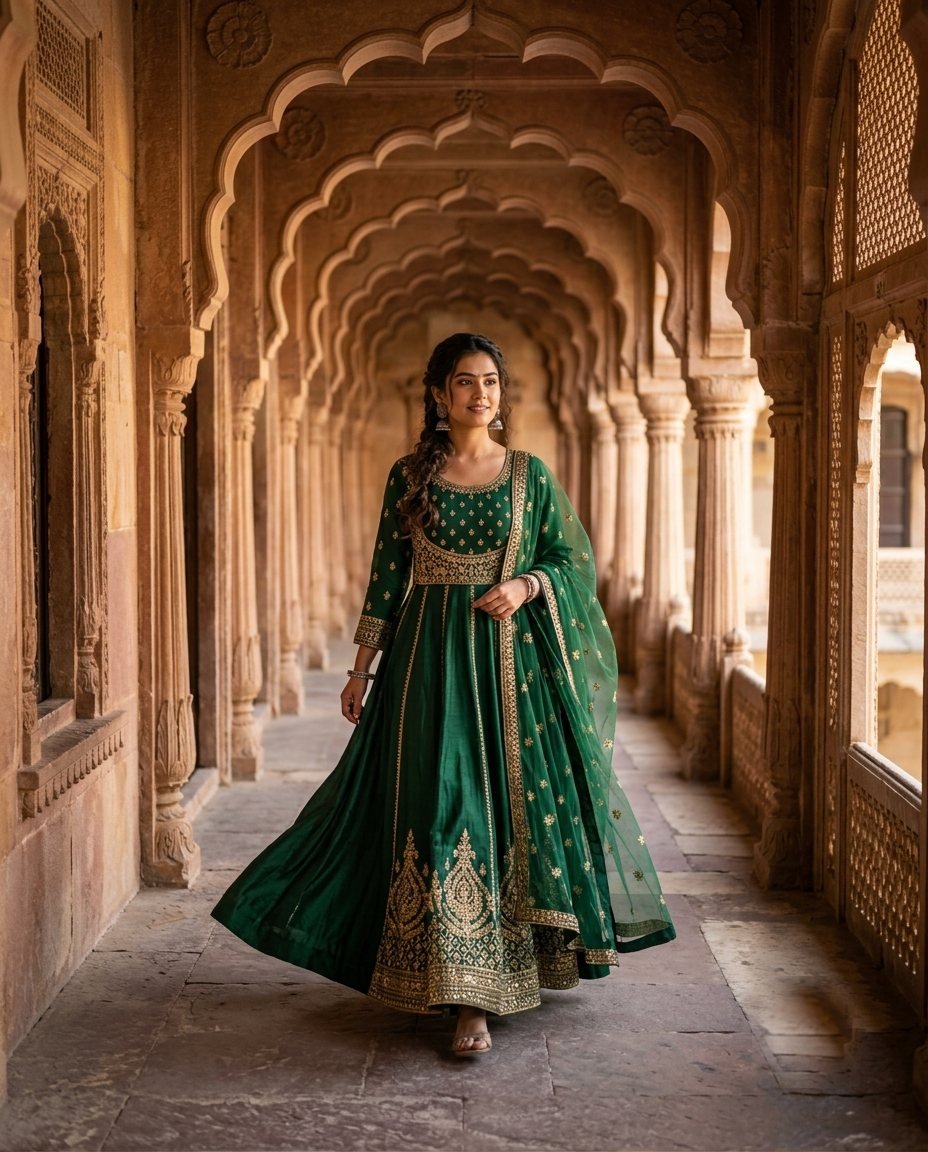
Using the uploaded photo as a character reference, recreate the woman walking down a long sandstone palace corridor with carved arches, wearing a floor-length bottle-green anarkali with gold zari work and a sheer net dupatta, oxidised silver jhumkas and a loose braid, the flared skirt sweeping behind her. A shaft of afternoon light from a jharokha window, repeating arches receding behind her, a regal calm mood, rich shadows, photorealistic, keep the face 100% identical to the uploaded photo.
Repeating arches give the frame depth. A single light source, here the jharokha window, keeps the green looking rich instead of flat.
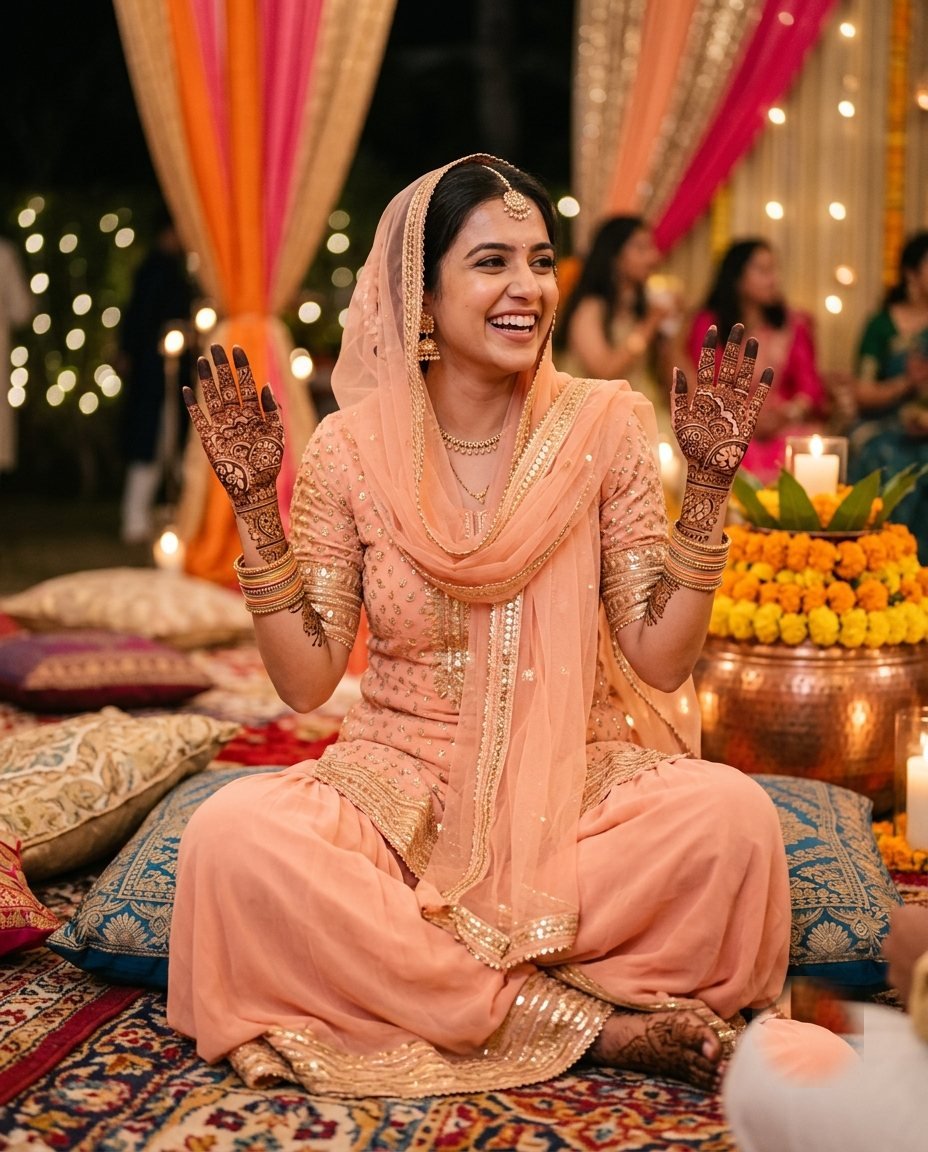
Using the uploaded photo as a character reference, recreate the woman sitting cross-legged on a floor cushion at a mehendi function, wearing a pastel peach gota patti sharara set with a short kurti and a sheer dupatta draped over her head, hands freshly decorated with mehendi raised beside her face, a copper pot of marigolds and fairy lights behind her. Soft golden candlelight, a relaxed and joyful mood, photorealistic, keep the face 100% identical to the uploaded photo.
Raised mehendi hands add a second focal point. Mehendi is hard for AI, so say "freshly decorated" and keep the design simple.
Regional and ceremony traditional look prompts
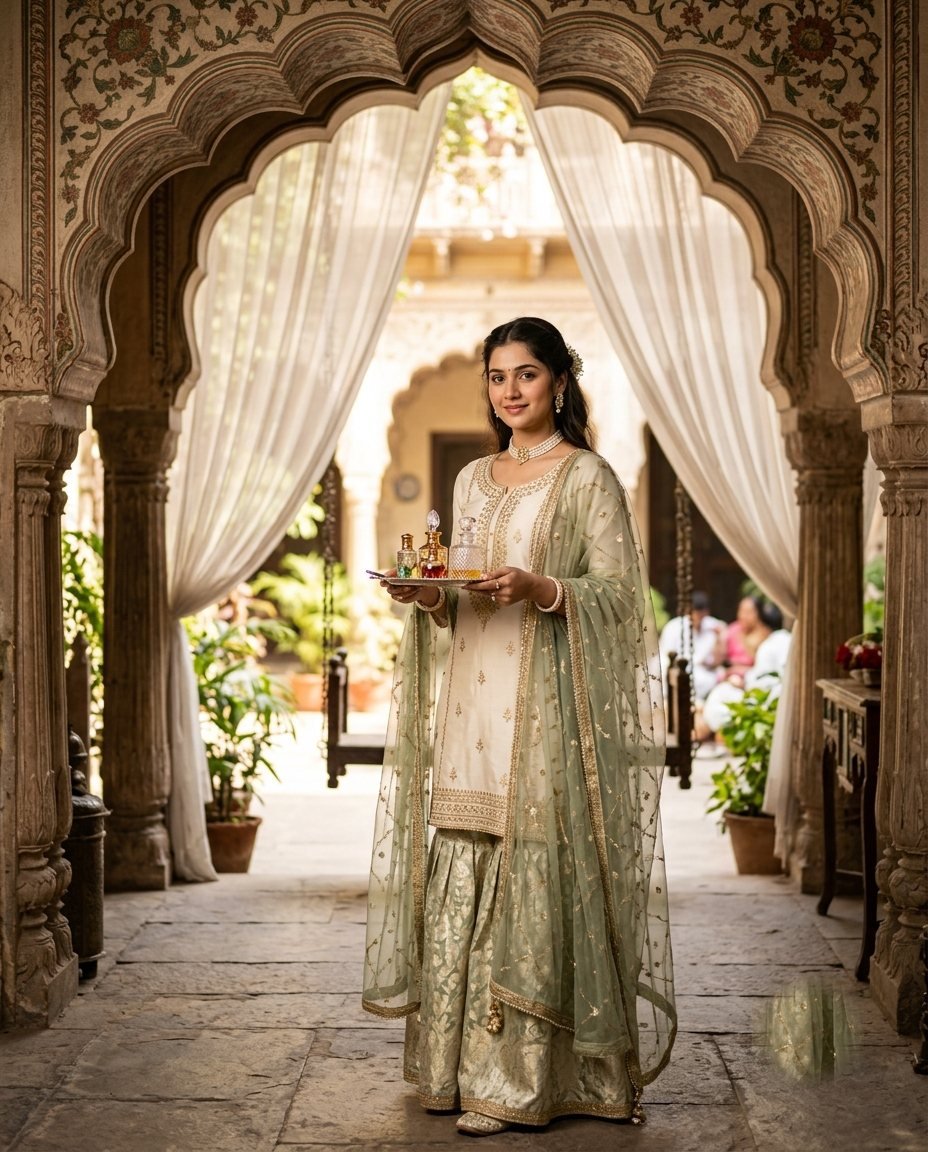
Using the uploaded photo as a character reference, recreate the woman standing in a Hyderabadi haveli courtyard with Indo-Persian arches, wearing an ivory silk kurta with a sage-green gharara and a long net dupatta, pearl jewellery, a tray of attar bottles and sheer curtains behind her. Soft morning light, an elegant Eid-morning mood, a gentle expression, photorealistic, keep the face 100% identical to the uploaded photo.
The wide flare at the knee is what makes a gharara. Include the word "gharara" and not just "skirt", or it draws a plain palazzo.
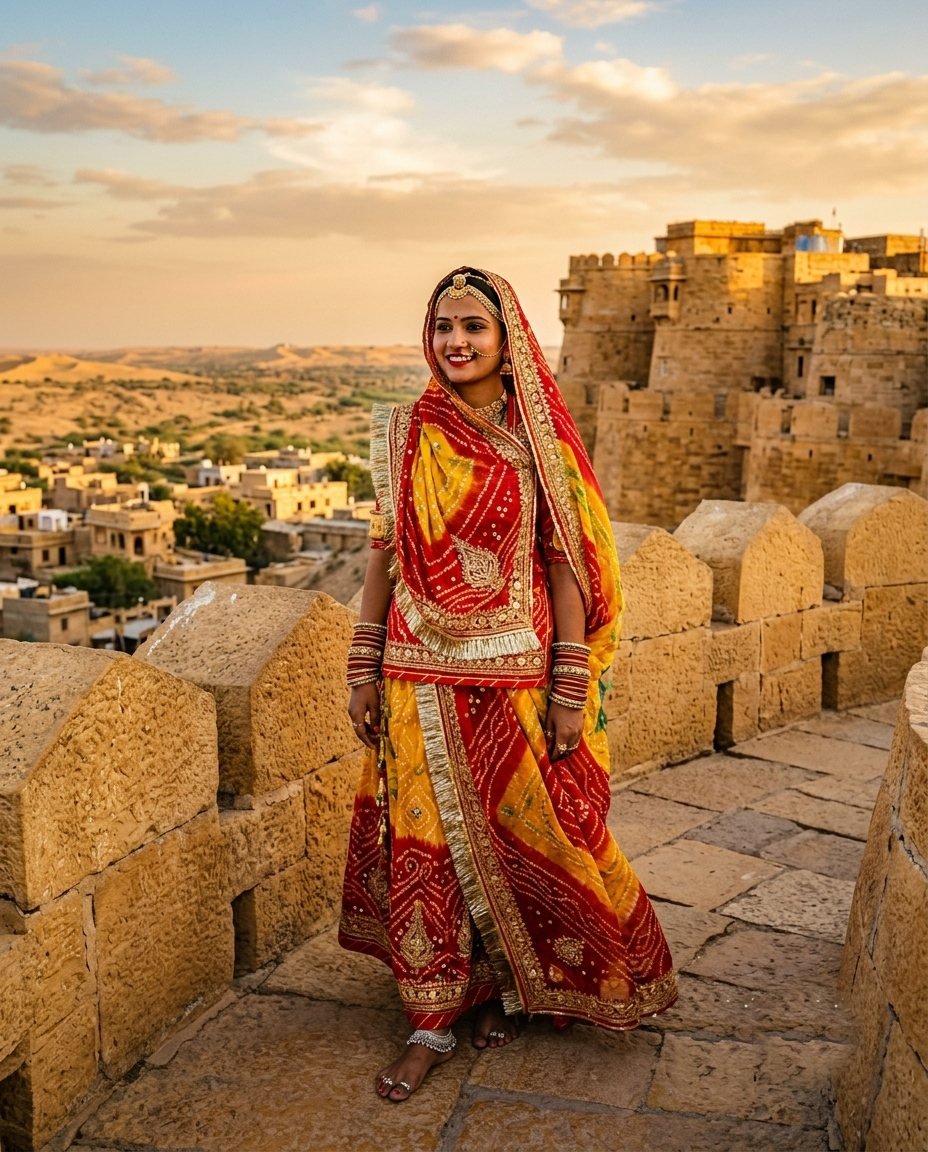
Using the uploaded photo as a character reference, recreate the woman standing on the rampart of a Jaisalmer sandstone fort at golden hour, wearing a red and yellow bandhani poshak (ghagra choli) with a long odhni, a gold maang tikka, silver anklets and a stack of bangles on both arms, the golden fort walls and the desert plain behind her. Warm glowing light, a proud stance, vivid colours, photorealistic, keep the face 100% identical to the uploaded photo.
Bandhani is a tie-dye dot pattern. Name it, or the model uses a random print. Gold stone against red cloth makes this one pop on a feed.
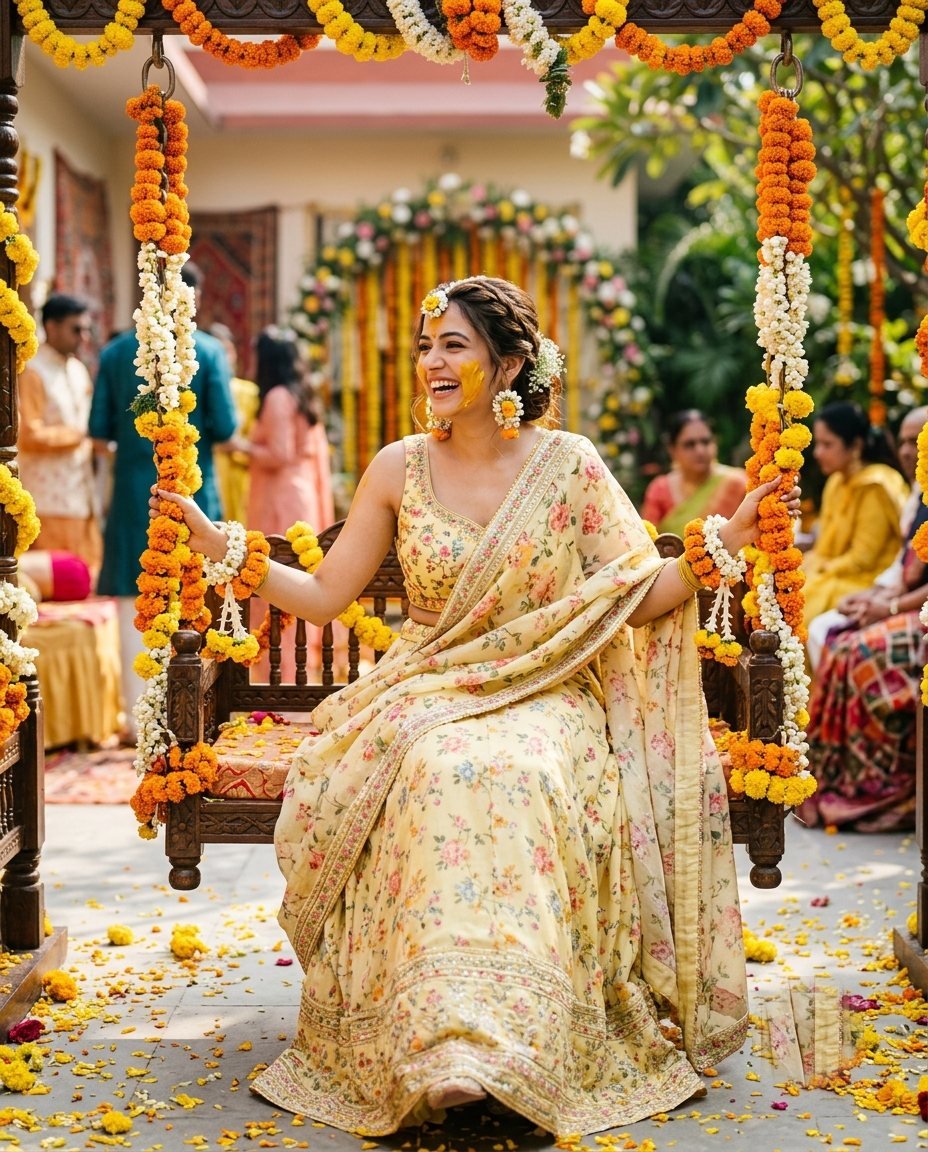
Using the uploaded photo as a character reference, recreate the woman sitting on a swing decorated with marigolds at a haldi ceremony, wearing a pastel yellow lehenga with a floral cotton dupatta, fresh flower jewellery in her hair, ears and wrists, a few streaks of turmeric on her cheek, laughing, with petals scattered on the floor. Bright morning sunlight, a joyful candid moment, photorealistic, keep the face 100% identical to the uploaded photo.
Fresh flower jewellery is the haldi signature. Keep it, and the outfit reads as a ceremony look and not a party look.
Why traditional look prompts usually go wrong
Four mistakes cause nearly every bad result:
- Writing "traditional look" and nothing else. The model picks the most generic outfit, usually a saree or a costume-style lehenga. Name the exact garment.
- Skipping the embroidery and jewellery. Zari, mirror work, gota patti, kundan and maang tikka are what make an outfit look real and not like fancy dress.
- Leaving out the setting. A palace corridor, a mehendi cushion or a haldi swing tells the model which ceremony and which light to use.
- Dropping the face-lock line. Without the closing sentence the model smooths the skin and reshapes the face. Keep it in every prompt.
Frequently asked questions
What is the difference between a lehenga, a ghagra and a sharara?
A lehenga and a ghagra are both long flared skirts, with "lehenga" usually meaning the heavily embroidered festive version. A sharara is a pair of very wide-legged trousers that flare from the knee, worn with a short kurti. A gharara is similar but gathered at the knee with a distinct flounce. The prompts use each name so the model draws the right cut.
Do these traditional look prompts work in ChatGPT as well as Gemini?
Yes. Both accept an uploaded reference photo and respond to the same descriptive structure. Gemini tends to hold facial likeness slightly better, while ChatGPT follows embroidery and jewellery details more literally.
Which of these is best for Diwali photos?
The Mirror-Work Lehenga and the Anarkali in a Palace Corridor suit Diwali well, since both look best in warm light. For dedicated festival sets, see our Diwali photo prompts for girls.
Can I change the outfit colour?
Yes. Swap the colour words freely, for example royal blue to maroon or bottle green to mustard, and keep the fabric, embroidery and jewellery terms. The garment name matters more than the shade.