Diwali falls in early November this year, and Diwali AI photo searches have already started to appear in Google Trends. The photos that get shared are never the generic ones. They are lit by real flame: a face glowing from a row of diyas, sparkler trails against a dark sky, warm lamp light on a silk saree.
That light is exactly what most prompts leave out, so the image comes back looking like a daytime studio shot with a festival backdrop. Every prompt below names the light source, the outfit, the props and the setting, so you get the glow and not just the decoration. Each ends with a face-lock line, so the woman in the image still looks like you. For more outfits, see our traditional look prompts, or for two or more people the Diwali couple and family prompts.
How to use these Diwali photo prompts
Upload one clear, front-facing photo first, then paste the prompt. They work as written in Gemini and ChatGPT.
- Use a sharp, well-lit reference. A blurry or filtered source photo is the main reason the face drifts.
- Keep the light words. "Flame light from below" and "warm orange against deep blue" are what create the Diwali glow.
- Swap the outfit colour, not the props. Change emerald to maroon freely, but leave the diyas, torans and lanterns in place.
- Ask for 4:5. Add "4:5 portrait" at the end so the image fills the Instagram feed.
Diya, rangoli and pooja Diwali prompts
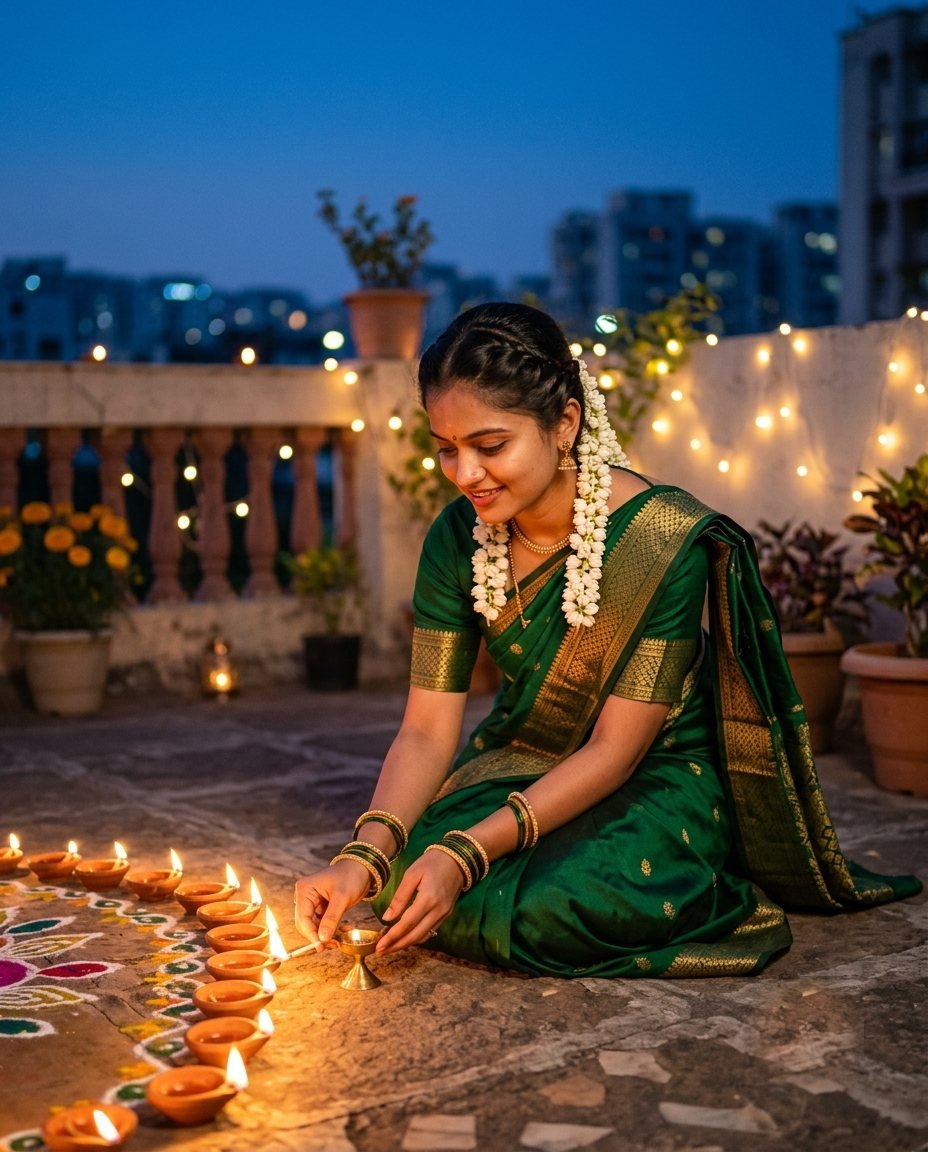
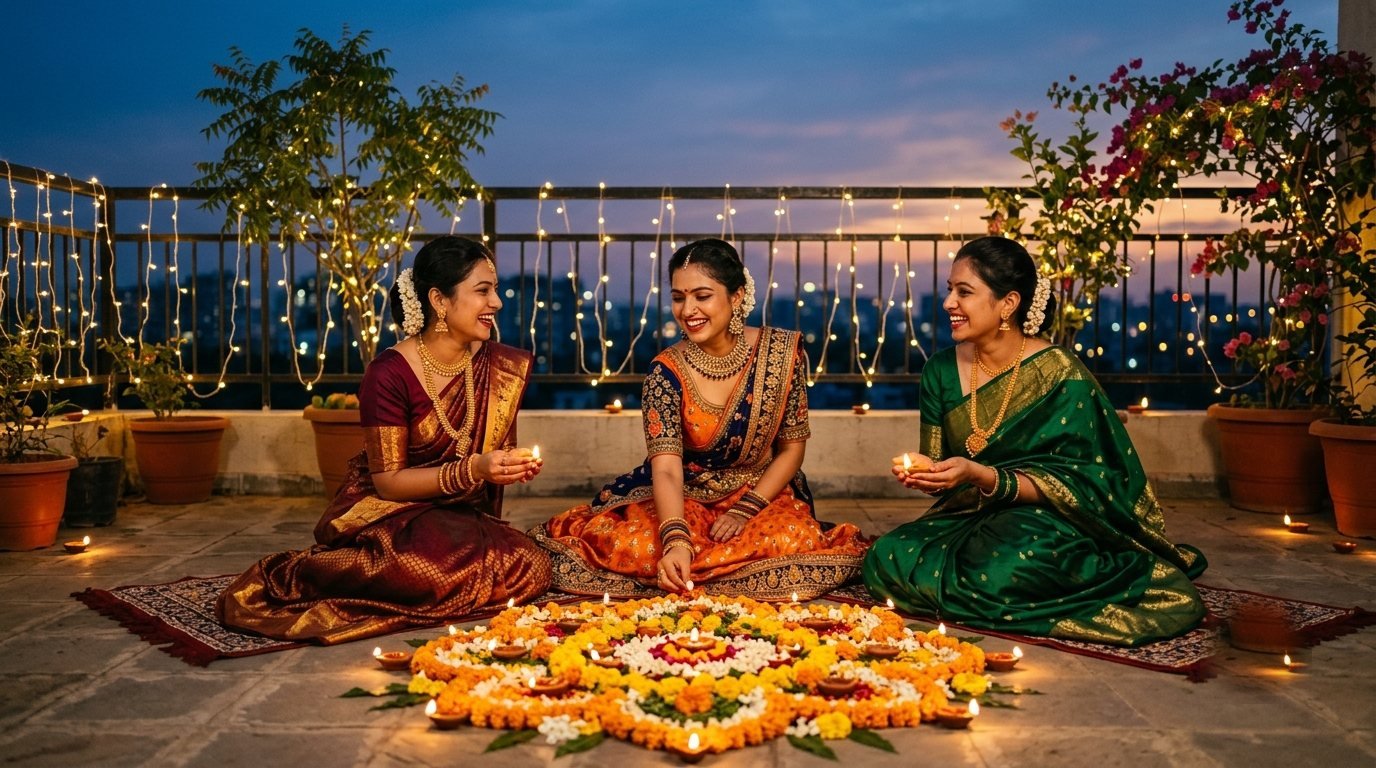
Using the uploaded photo as a character reference, recreate the woman kneeling on a terrace floor at dusk lighting a row of clay diyas, wearing an emerald-green silk saree with a gold border, jasmine in her hair and small gold jhumkas, the glow of the flames lighting her face from below, a string of fairy lights and a deep blue twilight sky behind her. Warm orange flame light against cool blue dusk, shallow depth of field, a serene smile, photorealistic, keep the face 100% identical to the uploaded photo.
The orange-against-blue contrast is the signature Diwali image. Keep "flames lighting her face from below" or the model lights her like a studio.
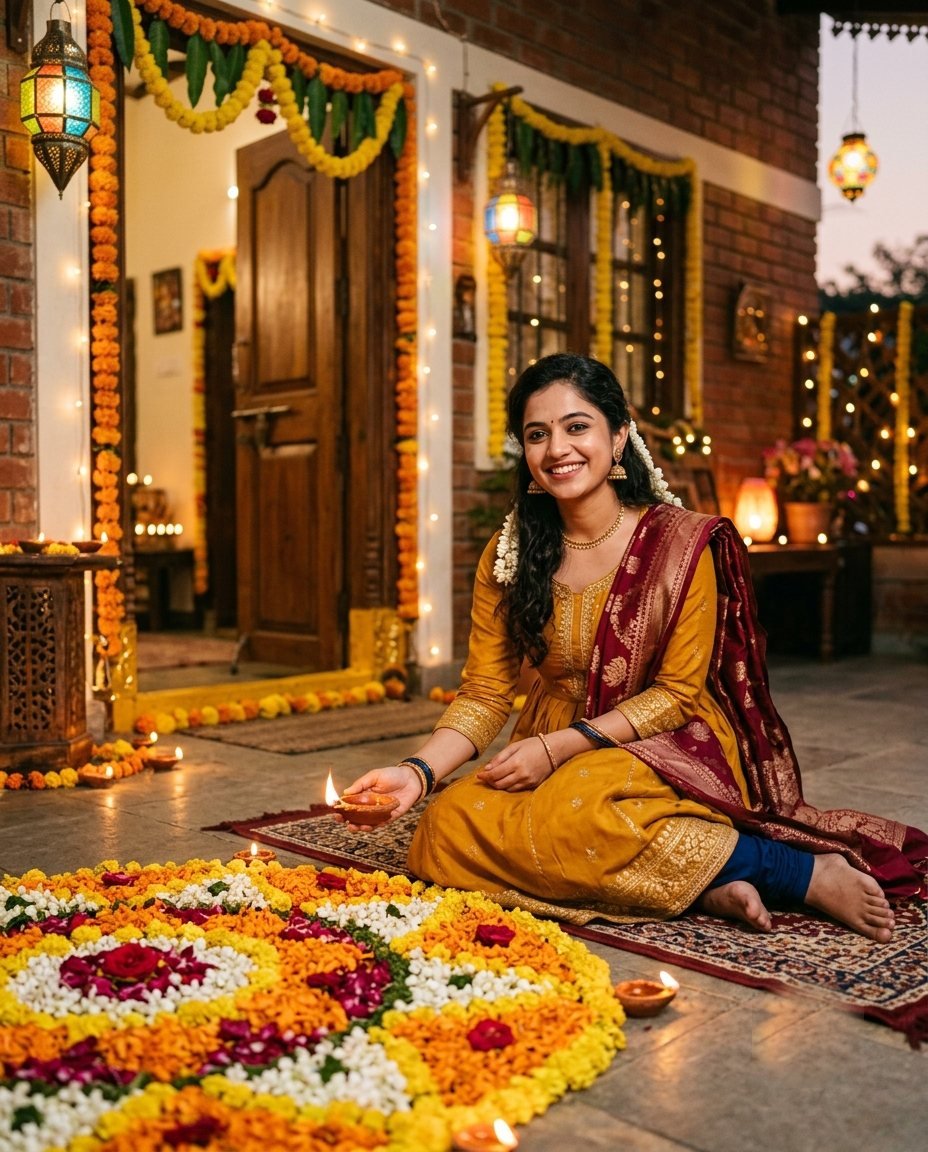
Using the uploaded photo as a character reference, recreate the woman sitting beside a colourful flower-petal rangoli at the doorstep of a decorated home, wearing a mustard-yellow anarkali with a maroon dupatta, one hand holding a small lit diya, marigold torans hanging over the doorway and glowing lanterns beside her. Warm evening light, vivid colours, a joyful candid smile, photorealistic, keep the face 100% identical to the uploaded photo.
Rangoli is hard to draw precisely, so describe it as "flower-petal rangoli" and let the model keep it loose. Torans add the festive frame.
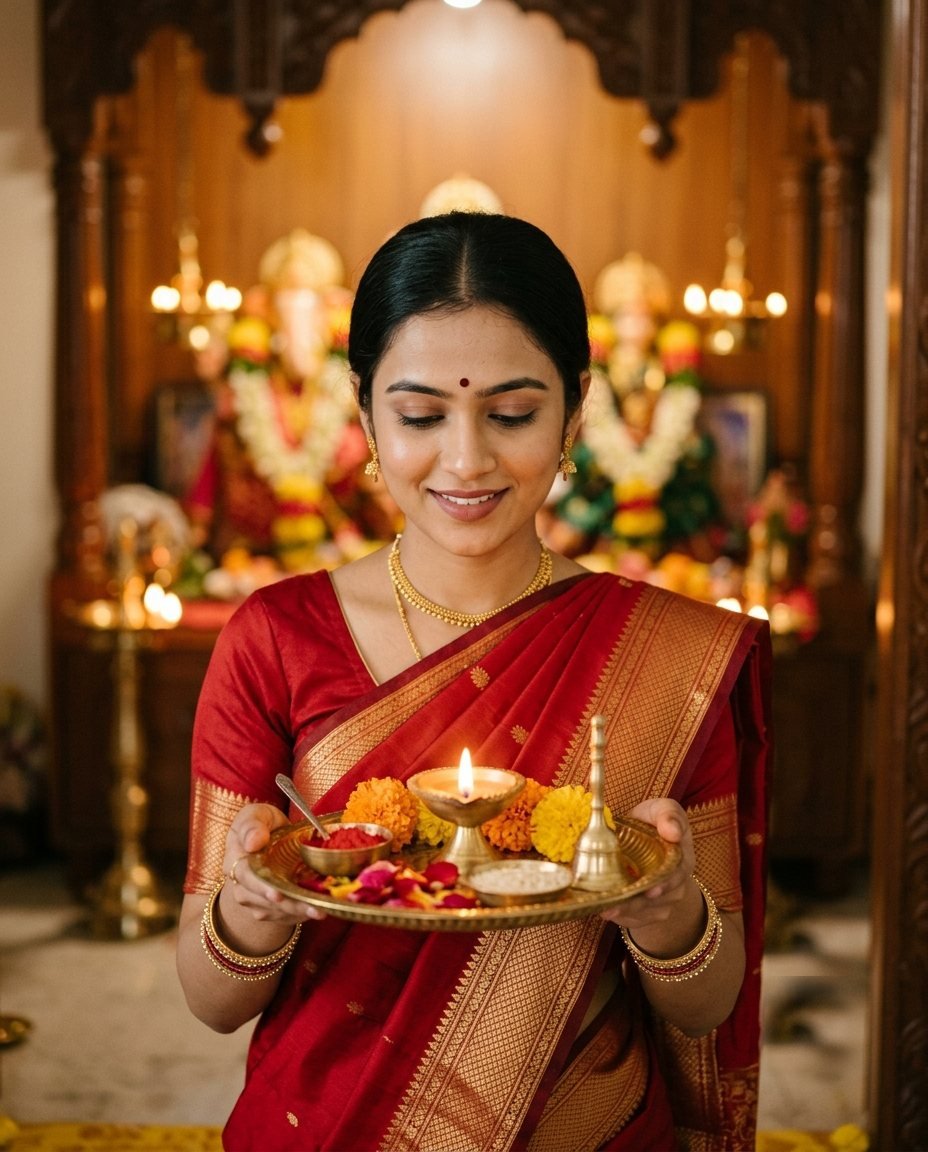
Using the uploaded photo as a character reference, recreate the woman holding a decorated brass pooja thali with a lit diya, flowers and roli at chest height, wearing a red silk saree with a gold zari border, a small bindi, bangles and a gold necklace, a small home temple blurred behind her with warm lamp light. Soft golden glow on her face, a calm devotional mood, shallow depth of field, photorealistic, keep the face 100% identical to the uploaded photo.
A quiet, close portrait. It works best with a front-facing reference photo, since the face is large in the frame.
Evening glow Diwali prompts
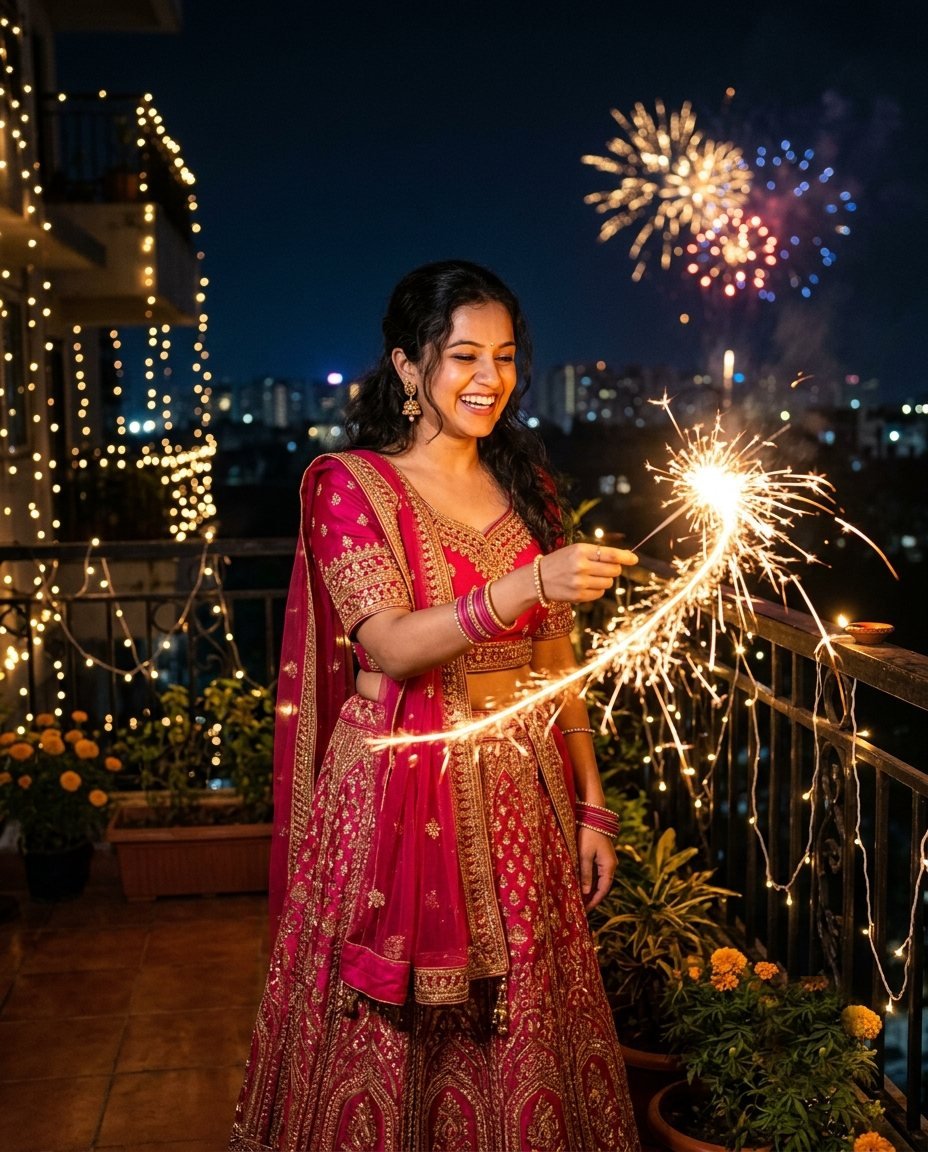
Using the uploaded photo as a character reference, recreate the woman standing on a dark balcony holding a glowing phuljhadi sparkler, wearing a pink and gold lehenga with a short dupatta, the sparks lighting her smiling face and trailing in the air, fairy lights and a few distant fireworks bursting in the night sky behind her. Long-exposure sparkle trails, deep blue night, warm golden light on her skin, photorealistic, keep the face 100% identical to the uploaded photo.
The sparkler is the light source, so the face and hands are lit and everything else falls into dark blue. That contrast is what makes it shareable.
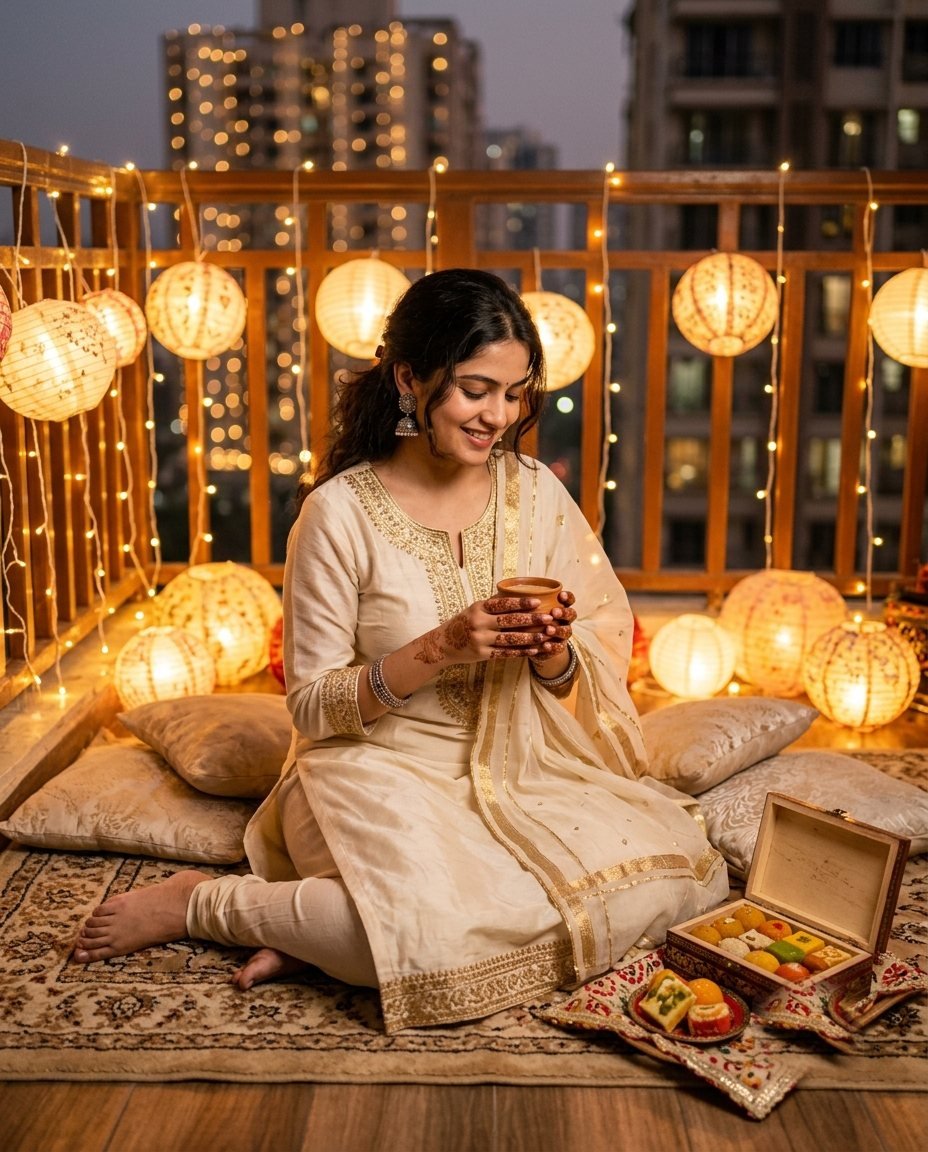
Using the uploaded photo as a character reference, recreate the woman sitting on a cushioned balcony floor surrounded by glowing paper lanterns and strings of warm fairy lights, wearing a cream kurta set with gold embroidery and a sheer dupatta, silver jhumkas, a cup of tea in her hands and a box of mithai beside her. Warm bokeh lights, a cosy evening mood, soft colours, photorealistic, keep the face 100% identical to the uploaded photo.
The most relaxed of the six. A cream outfit lets the warm lights colour the whole frame.
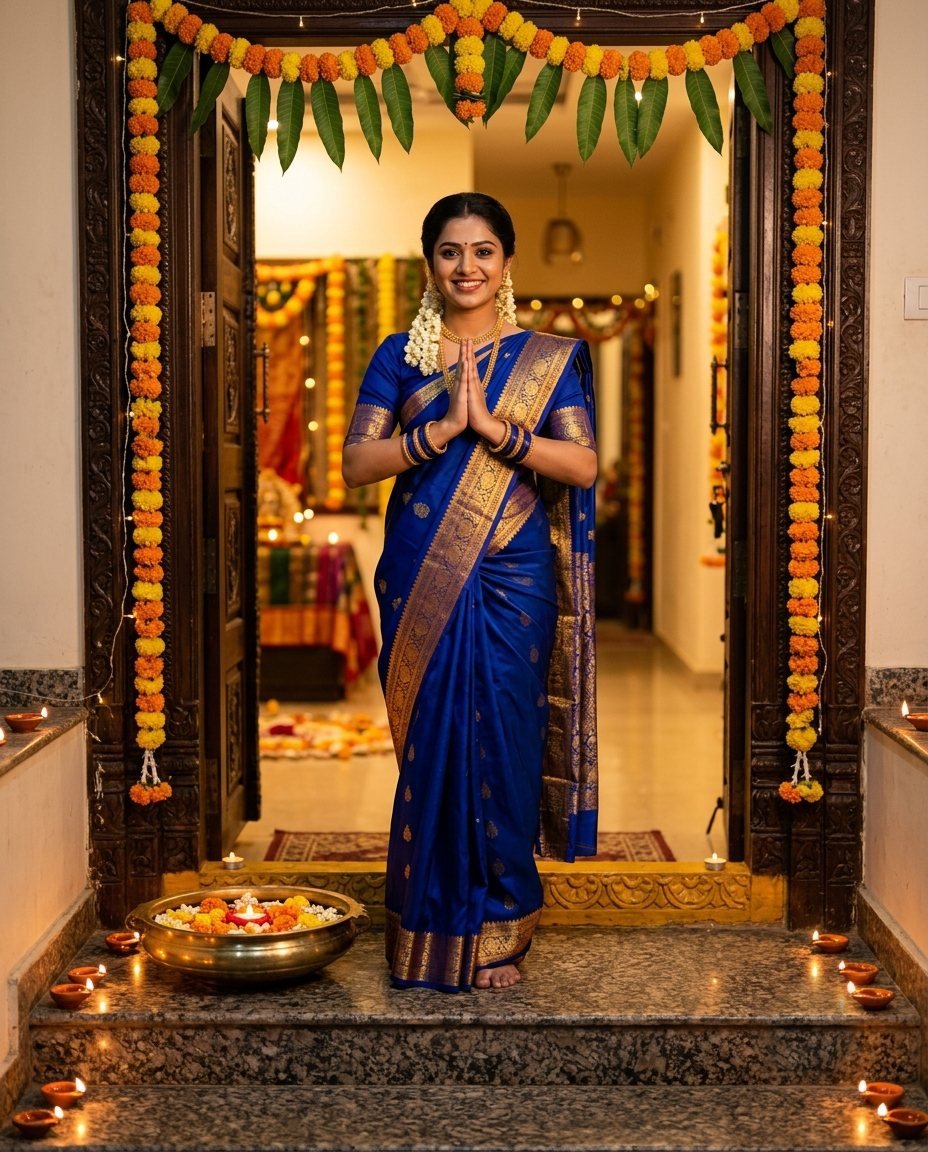
Using the uploaded photo as a character reference, recreate the woman standing in a doorway decorated with fresh marigold garlands and mango leaves, wearing a royal-blue silk saree with a gold border, her hands folded in a namaste welcome, a brass urli bowl of floating flowers and candles at her feet, the glow of diyas lining the steps. A welcoming smile, rich colour, warm lamp light, photorealistic, keep the face 100% identical to the uploaded photo.
Blue against marigold orange is a strong colour pair. This one also works well as a greeting image.
Why Diwali photo prompts usually look flat
Four mistakes cause most of the disappointing results:
- Writing "Diwali look" and nothing else. The model adds a few fireworks to a studio portrait. Name the diyas, torans, rangoli and lanterns.
- Leaving out the light source. Diwali photos are lit by flame, not by a softbox. Say where the light comes from and its colour.
- Overloading the frame. Diyas, lanterns, fireworks and rangoli in one image look crowded. Pick two or three props per prompt.
- Dropping the face-lock line. Without the closing sentence the model smooths the skin and reshapes the face. Keep it in every prompt.
Frequently asked questions
How do I get a realistic diya glow in AI photos?
Say where the light comes from and how it looks: for example, "flames lighting her face from below, warm orange light against a cool blue twilight". Without that, the model lights the face evenly and the diyas become decoration.
Do these Diwali prompts work in ChatGPT as well as Gemini?
Yes. Both accept an uploaded reference photo and respond to the same descriptive structure. Gemini tends to hold facial likeness slightly better, while ChatGPT follows props and outfit details more literally.
Can I use these for a couple or a family photo?
For two or more people, use the Diwali couple and family prompts, which are written for several faces. For a solo photo, these six are the best fit.
Which outfit colours work best for Diwali photos?
Jewel tones photograph best against flame light: emerald, royal blue, magenta, maroon and mustard, usually with gold borders. Very pale colours can look washed out under warm light, so add a darker dupatta or border.