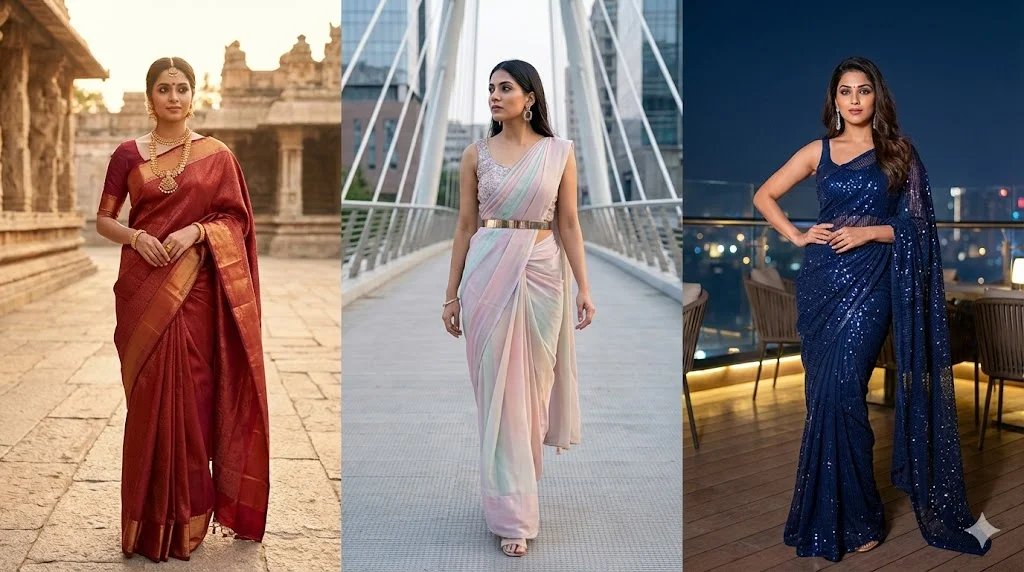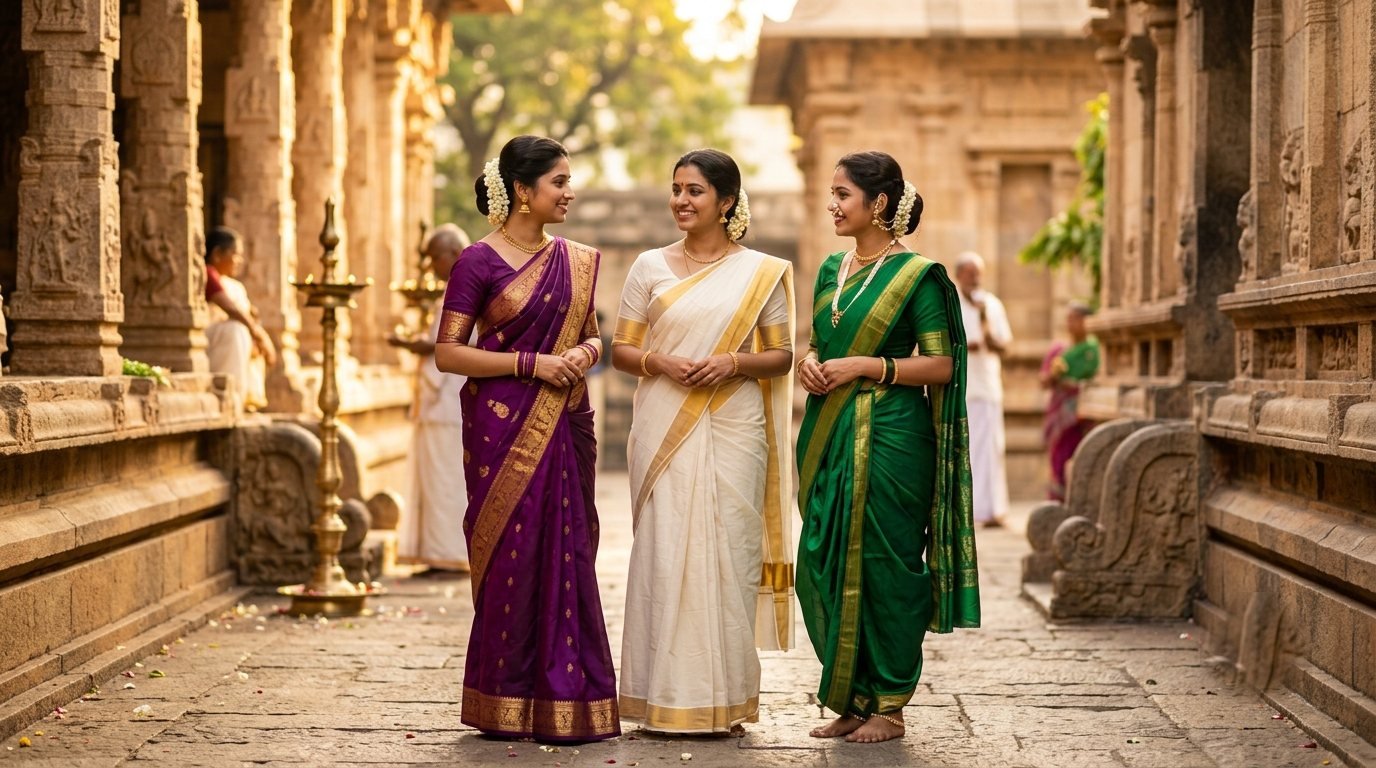
Ask an AI for "a saree" and you get the North Indian drape worn with a flowing pallu and chiffon, because that is what most of its training photos show. South Indian and Maharashtrian looks are different garments: the Kanjivaram with its temple border, the Kerala kasavu, the half saree, and the nine-yard nauvari that is draped between the legs like a dhoti. Unless the prompt names them, the model does not draw them.
Every prompt below names the weave, the drape, the jewellery and the setting, so the look comes out right. Three are South Indian and three are Marathi. Each ends with a face-lock line, so the woman in the image still looks like you. For other regions, see our Bengali saree prompts or the best saree prompts for Gemini.
How to use these South Indian and Marathi saree prompts
Upload one clear, front-facing photo first, then paste the prompt. They work as written in Gemini and ChatGPT.
- Use a sharp, well-lit reference. A blurry or filtered source photo is the main reason the face drifts.
- Keep the weave and drape words. "Kanjivaram", "kasavu" and "nauvari" decide the whole garment. Do not replace them with "saree".
- Keep the regional jewellery. Kasu mala, nath and chandrakor bindi are what mark the region, so leave them in.
- Ask for 4:5. Add "4:5 portrait" at the end so the image fills the Instagram feed.
South Indian saree prompts
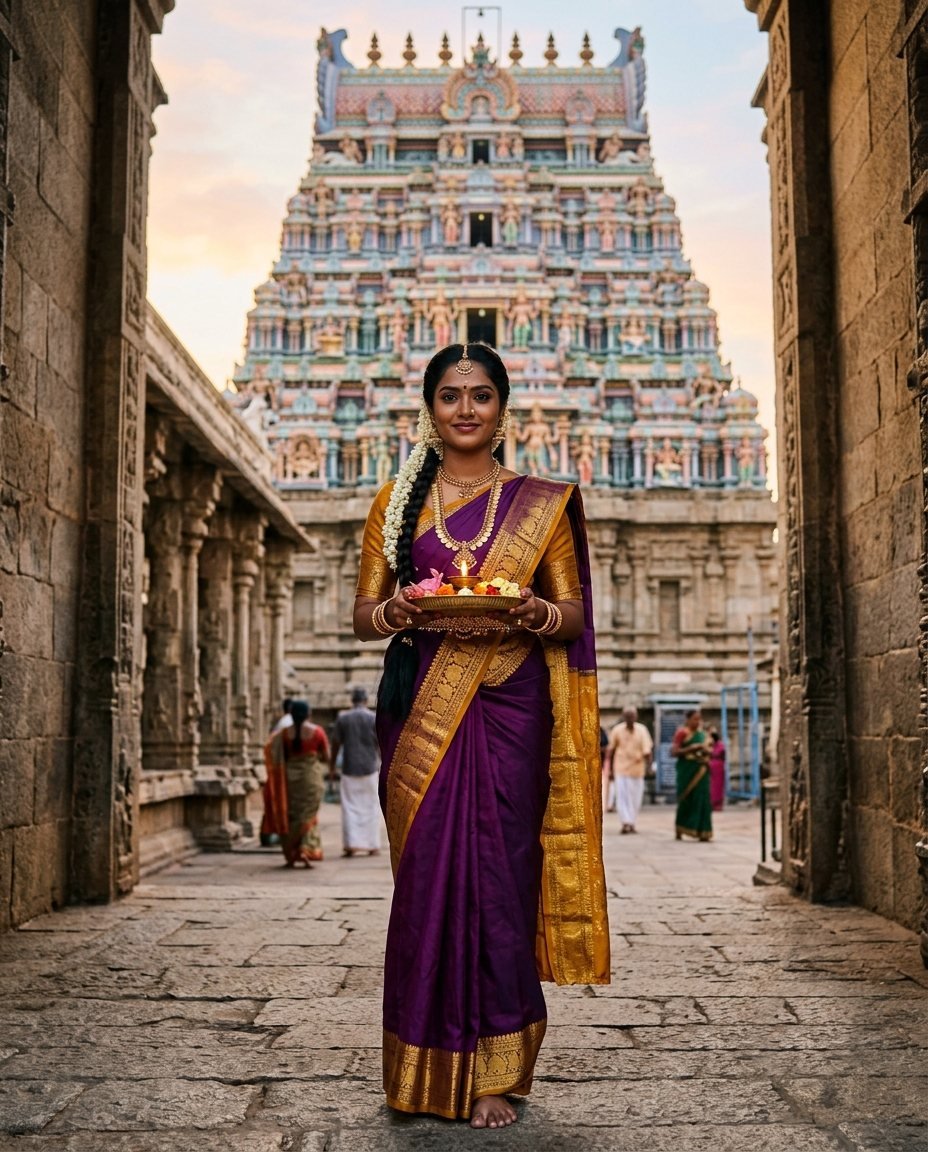
Using the uploaded photo as a character reference, recreate the woman standing at the entrance of a Dravidian temple with a colourful gopuram rising behind her, wearing a deep purple Kanjivaram silk saree with a wide gold temple border and a contrasting mustard pallu, temple jewellery with a kasu mala, a long braid with a jasmine gajra, a kumkum bindi, and a small brass pooja tray in her hands. Soft early-morning light on warm stone, a serene devotional mood, photorealistic, keep the face 100% identical to the uploaded photo.
The wide temple border and the contrasting pallu are what separate a Kanjivaram from a plain silk. Name both.
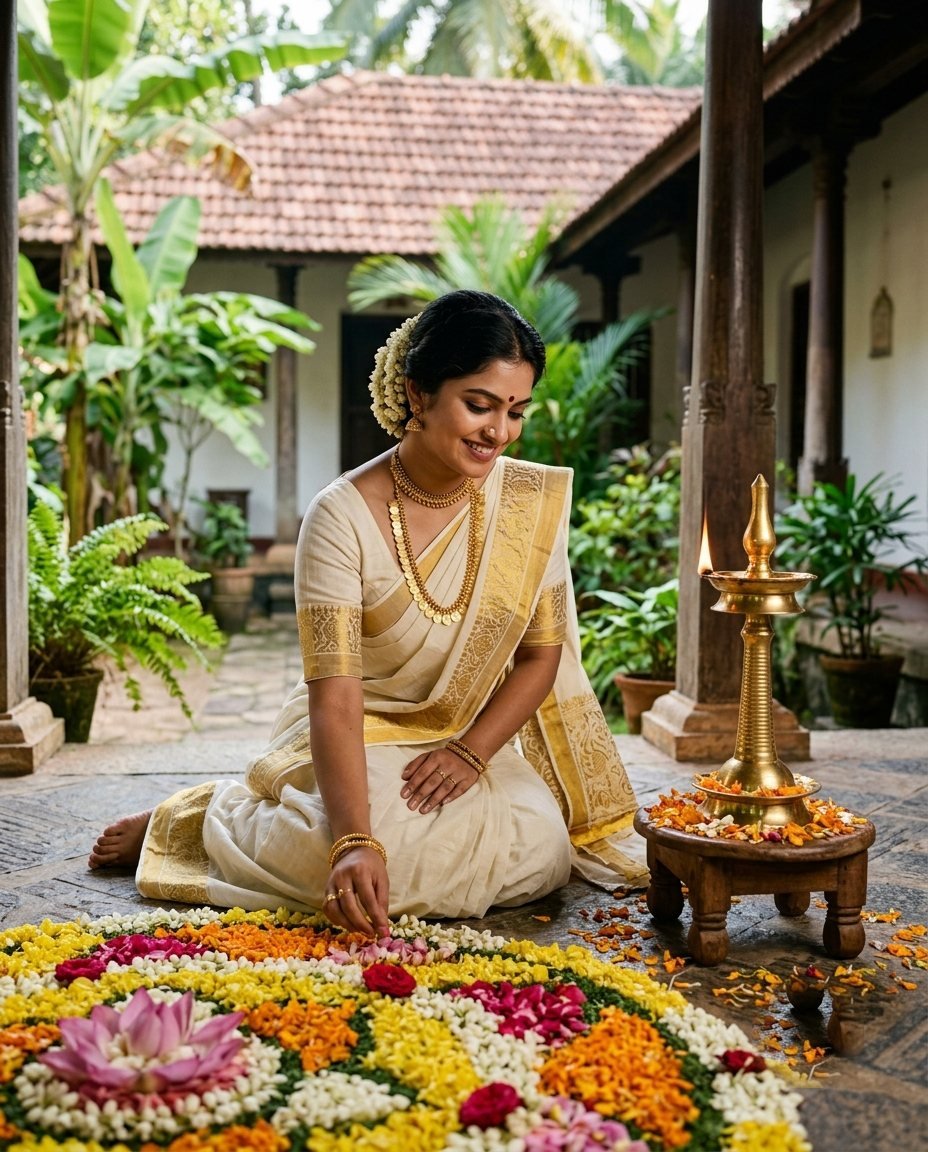
Using the uploaded photo as a character reference, recreate the woman kneeling beside a large flower pookalam in the courtyard of a Kerala home on Onam morning, wearing an off-white kasavu saree with a gold border, fresh jasmine in her hair, a gold necklace and a small bindi, tropical greenery and a tiled roof behind her and a lit brass nilavilakku lamp beside her. Soft morning light, a calm joyful mood, photorealistic, keep the face 100% identical to the uploaded photo.
Off-white with a plain gold border is the whole kasavu look. If the model adds a printed pattern, add "no print, plain off-white cotton".
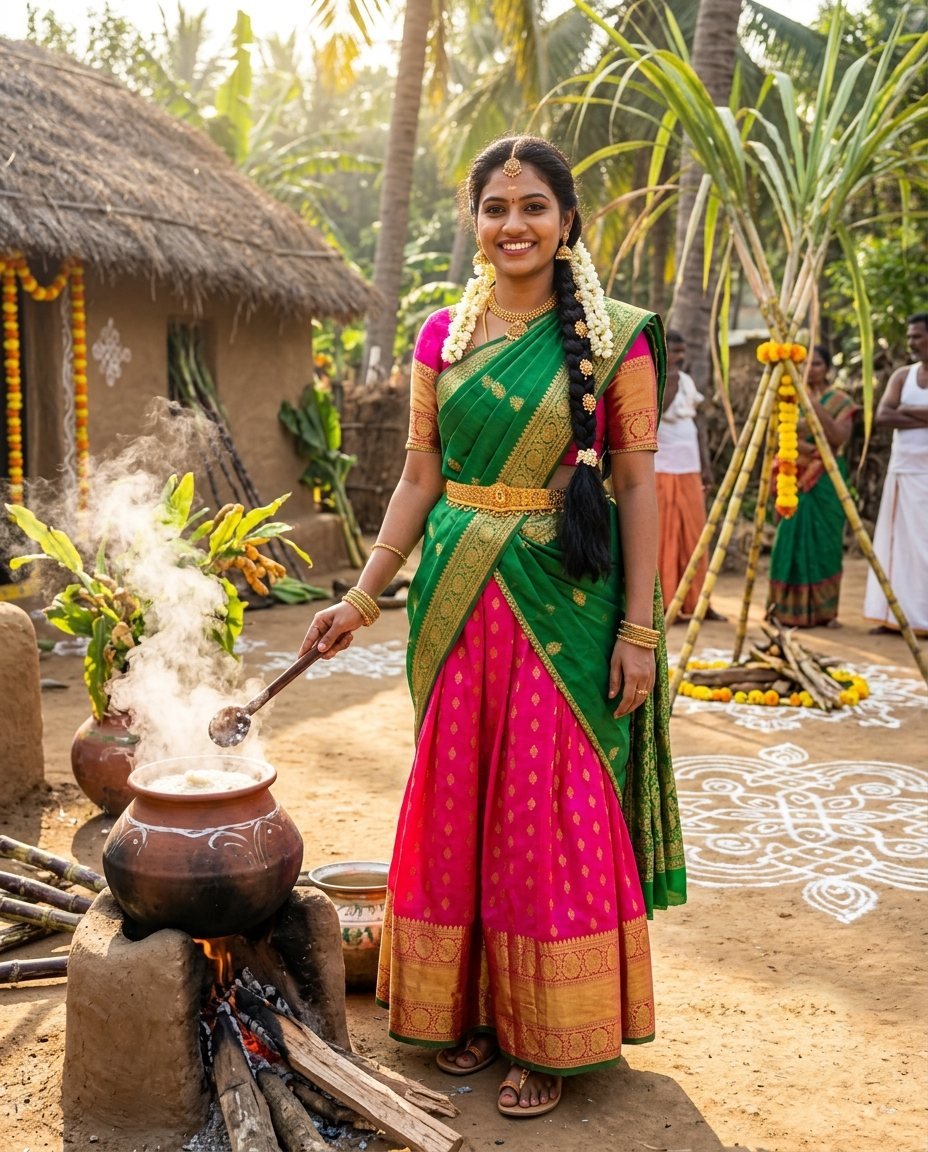
Using the uploaded photo as a character reference, recreate the woman standing in front of a clay pot of boiling pongal in a village courtyard, wearing a rani-pink and green silk half saree (langa voni) with a gold border, a long braid with flowers, jhumkas and a gold waist belt, sugarcane stalks and a kolam on the ground behind her and steam rising from the pot. Bright sunlit morning, vivid colours, a joyful smile, photorealistic, keep the face 100% identical to the uploaded photo.
A half saree is a skirt, a blouse and a draped dupatta-style cloth. Use the word "langa voni" so it is not drawn as a normal saree.
Marathi saree prompts
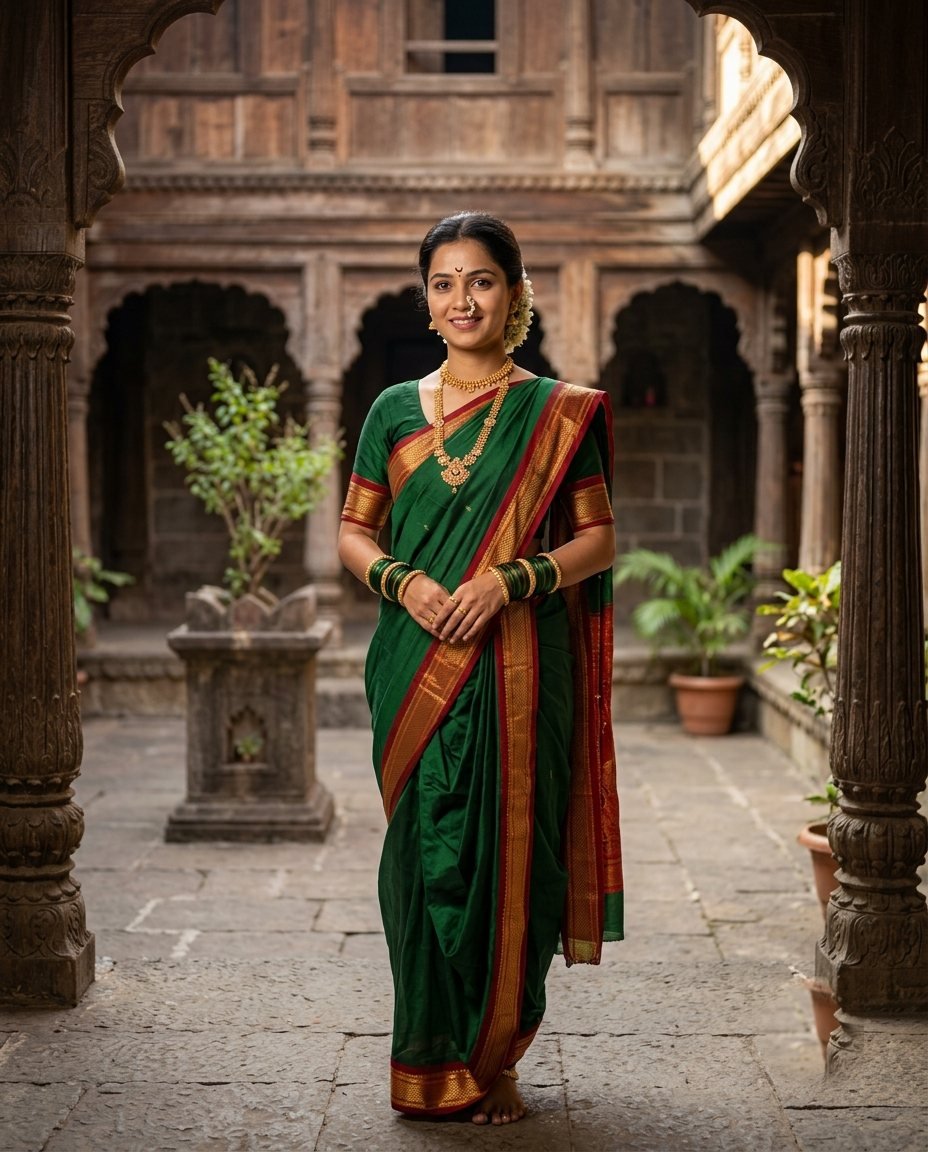
Using the uploaded photo as a character reference, recreate the woman standing in the courtyard of a Maharashtrian wada, wearing a nine-yard nauvari saree in deep green with a red border draped in the traditional kasta style, a pearl nath (nose ring), a chandrakor bindi, green glass bangles, a kolhapuri saaj necklace and her hair in a bun with a gajra. Soft morning light on carved wooden pillars, a proud calm expression, photorealistic, keep the face 100% identical to the uploaded photo.
The nine-yard drape is the hardest part. "Kasta style" tells the model it is a dhoti-like drape, not a regular pleated saree.
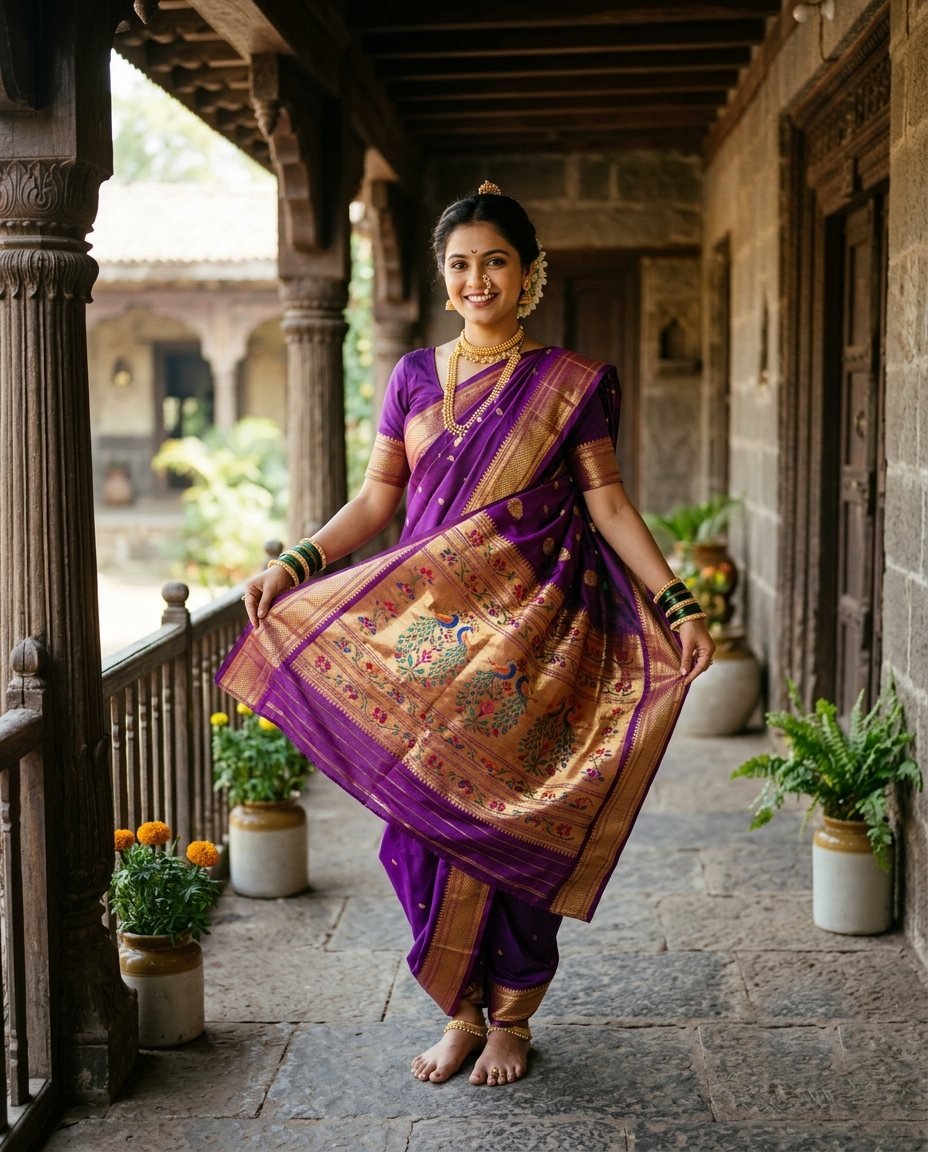
Using the uploaded photo as a character reference, recreate the woman standing on the veranda of a heritage Maharashtrian house with carved wooden pillars, holding out the pallu of a purple Paithani silk saree with a woven peacock motif in both hands, a gold border, a pearl nath and a thushi necklace. Soft afternoon light, a gentle smile, rich silk texture, photorealistic, keep the face 100% identical to the uploaded photo.
Holding the pallu out shows the peacock weave. Paithani is known for that motif, so always name it.
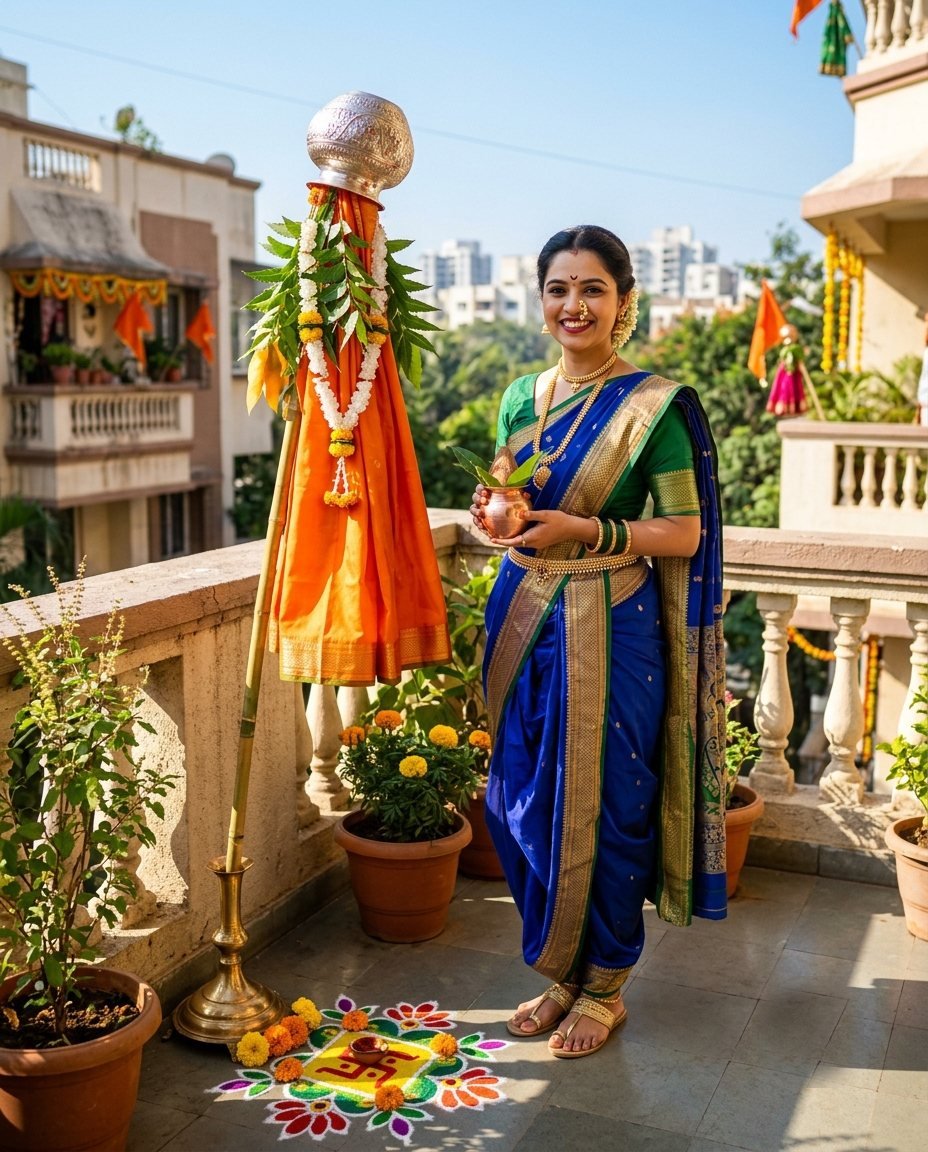
Using the uploaded photo as a character reference, recreate the woman standing beside a gudi on a balcony on Gudi Padwa morning, a bright silk cloth, neem leaves, a sugar garland and an upturned silver pot on a tall bamboo, wearing a royal-blue nauvari saree with a gold border, a pearl nath and a chandrakor bindi, a small rangoli at her feet. Bright morning sun, a festive smiling mood, vivid colours, photorealistic, keep the face 100% identical to the uploaded photo.
The gudi is the festival marker, so describe it in full. It also gives a tall vertical element that suits a 4:5 frame.
Why South Indian and Marathi saree prompts go wrong
Four mistakes cause nearly every bad result:
- Writing "traditional saree". The model defaults to the North Indian drape. Name the weave (Kanjivaram, kasavu, Paithani) or the drape (nauvari, half saree).
- Skipping the jewellery. A kasu mala, a pearl nath and a chandrakor bindi are regional signatures. Without them the look reads as generic.
- Forgetting the setting. A temple gopuram, a pookalam or a wada courtyard tells the model the region as strongly as the garment does.
- Dropping the face-lock line. Without the closing sentence the model smooths the skin and reshapes the face. Keep it in every prompt.
Frequently asked questions
What is a nauvari saree?
A nauvari is the traditional nine-yard Maharashtrian saree, draped between the legs in a style called kasta, similar to a dhoti. It is worn with a pearl nath and a chandrakor bindi. The prompts above spell this out so the model draws the drape correctly.
What is the difference between a Kanjivaram and a kasavu saree?
A Kanjivaram is a heavy silk from Tamil Nadu with a wide temple border and rich colours. A kasavu is a light off-white cotton from Kerala with a simple gold border. They look very different, so each prompt names its own.
Do these work in ChatGPT as well as Gemini?
Yes. Both accept an uploaded reference photo and respond to the same descriptive structure. Gemini tends to hold facial likeness slightly better, while ChatGPT follows drape and jewellery details more literally.
Which of these is best for Instagram?
The Kanjivaram at the Temple Gopuram and the Gudi Padwa Morning perform best because the colour contrast reads clearly at thumbnail size. Use the 4:5 ratio so the post fills the feed.