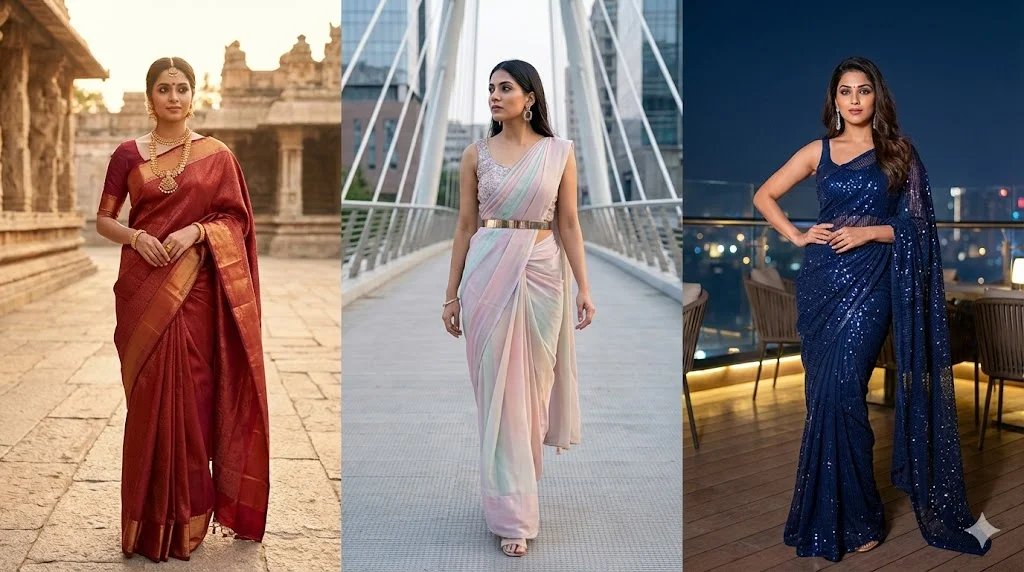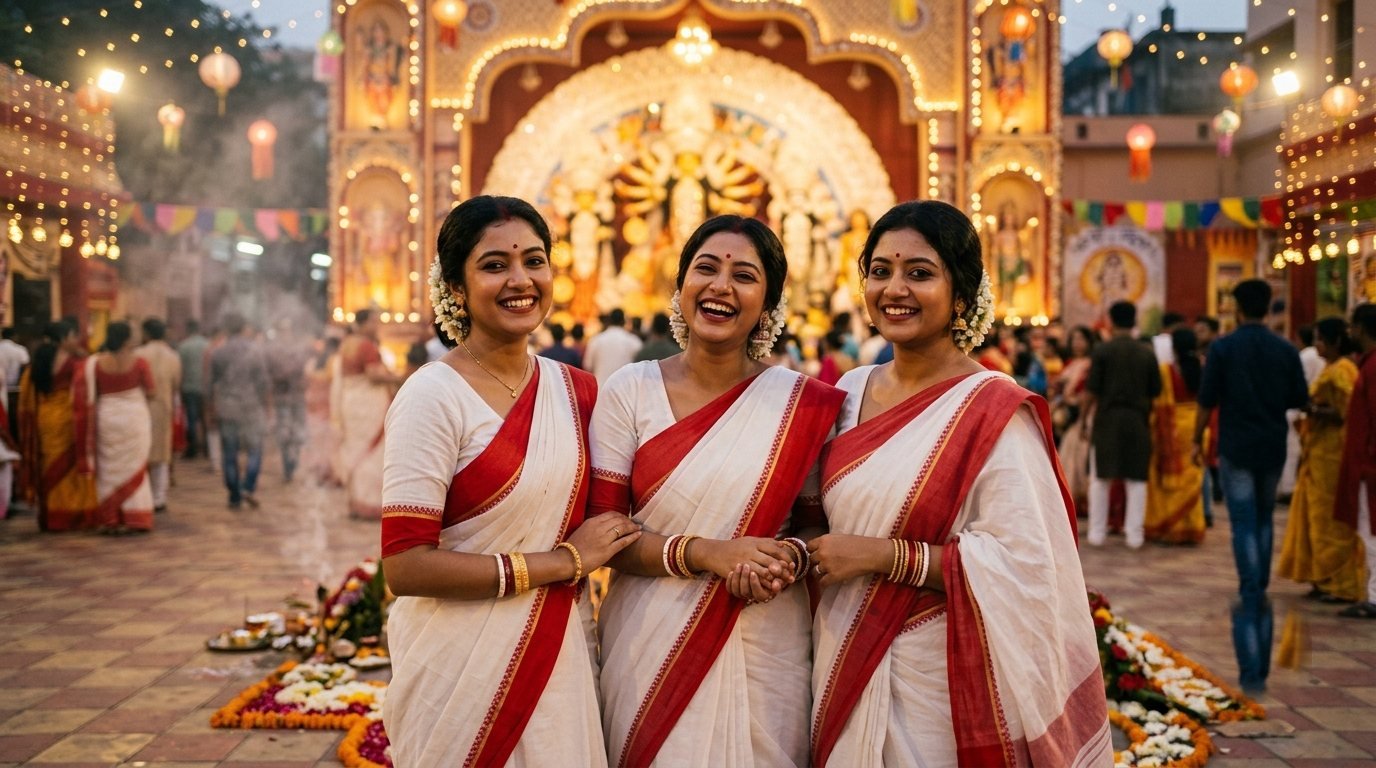
Bengali style saree prompts are among the most searched saree looks in India, and most AI results miss the point. Ask for "an Indian saree" and the model hands you a Maharashtrian or South Indian drape. The Bengali look has its own identity: the white saree with a broad red border, a pallu brought over the left shoulder, and small details like a bunch of keys at the pallu end.
Every prompt below names those details, so the drape, border and jewellery come out right. They cover the looks people actually try during Durga Puja season (laal paar, the pandal at dusk, sindoor khela) plus tant, Baluchari, kantha and a bridal portrait. Each ends with a face-lock line, so the woman in the image still looks like you. For other drapes, see our best saree prompts for Gemini.
How to use these Bengali saree prompts
Upload one clear, front-facing photo first, then paste the prompt. They work as written in Gemini and ChatGPT.
- Use a sharp, well-lit reference. A blurry or filtered source photo is the main reason the face drifts.
- Keep the drape words. "Bengali drape", "pallu over the left shoulder" and the border colour are what stop the model from drawing a generic saree.
- Adjust the symbols to you. Sindoor and shankha-pola are worn by married women. Delete them from the prompt if they do not apply.
- Ask for 4:5. Add "4:5 portrait" at the end so the image fills the Instagram feed.
Durga Puja and festival Bengali saree prompts
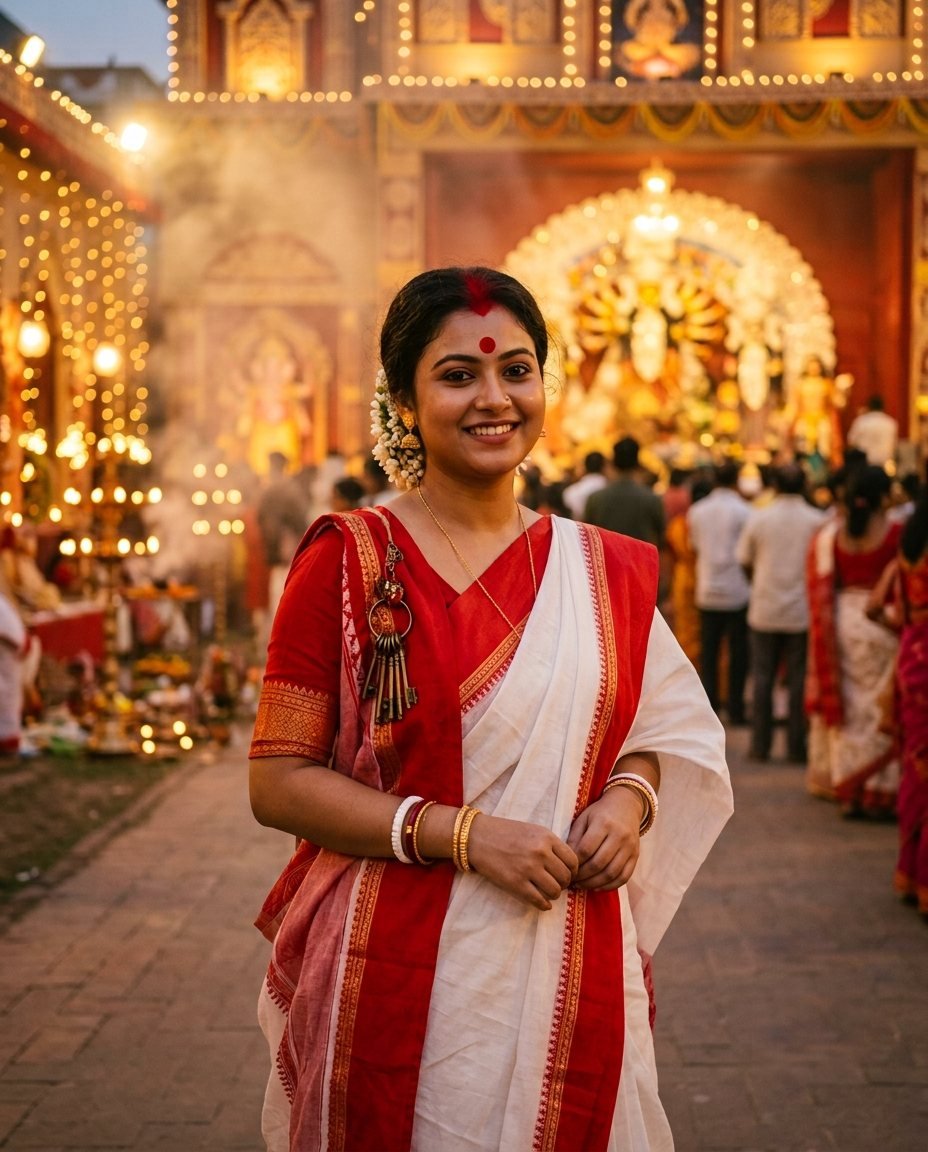
Using the uploaded photo as a character reference, recreate the woman standing in front of a brightly lit Durga Puja pandal at dusk, wearing a white cotton saree with a broad red border (laal paar) in the Bengali drape, the pallu brought over the left shoulder with a bunch of keys tied to its end, a large round red bindi, red sindoor in her hair parting, white shankha and red pola bangles with a thin gold bangle, hair in a loose bun with fresh white flowers. The warm glow of festival lights and a faint haze of incense smoke behind her, shallow depth of field, a gentle smile, photorealistic, keep the face 100% identical to the uploaded photo.
The most searched Bengali look, so start here. Remove the sindoor and the bangles if they do not apply to you; the saree and drape still carry the look.
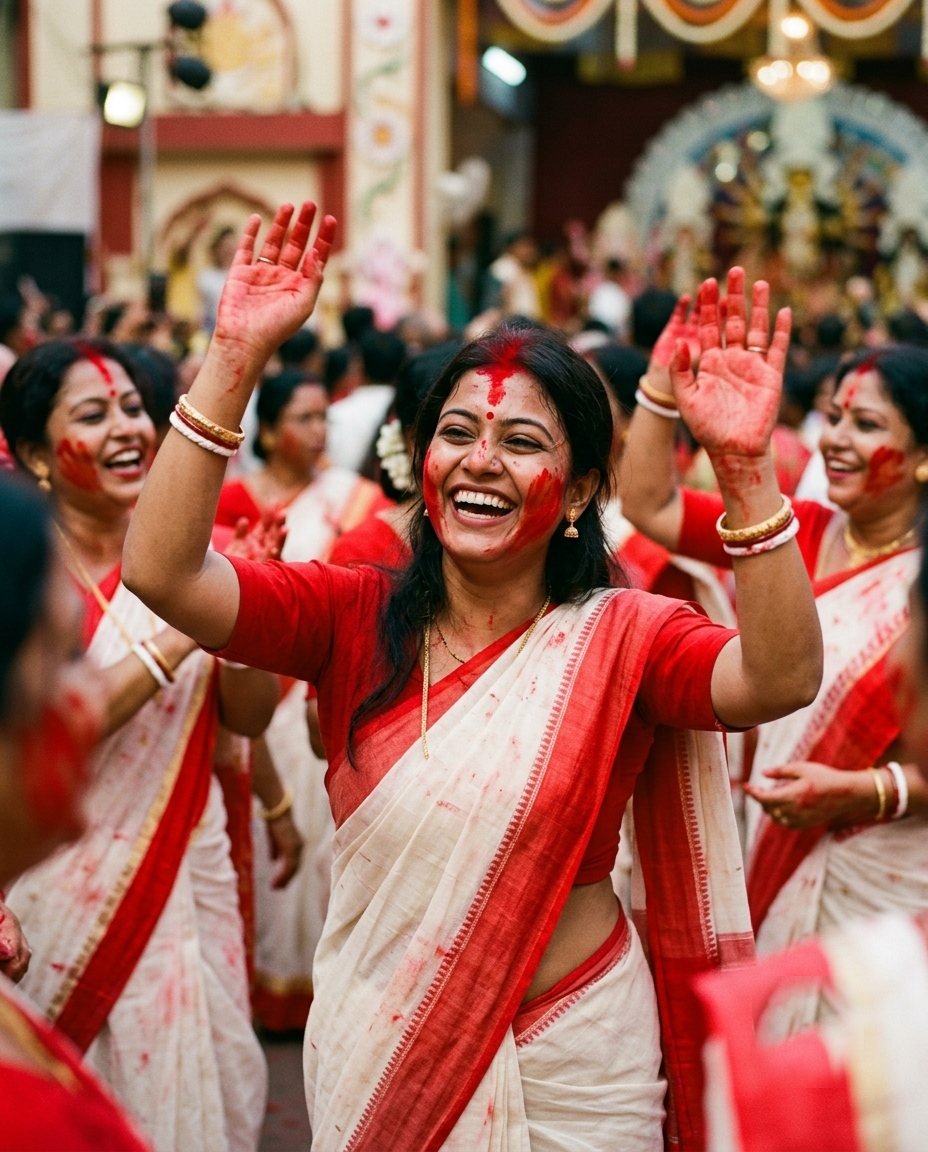
Using the uploaded photo as a character reference, recreate the woman laughing mid-celebration at a Durga Puja Dashami sindoor khela, wearing a red-bordered white saree, bright red sindoor smeared across her forehead and cheeks, her hands raised with sindoor on the palms, other women in similar sarees blurred around her. Soft afternoon light, vivid reds against white, a candid frozen moment, photorealistic, keep the face 100% identical to the uploaded photo.
A candid prompt that works best with an open, smiling reference photo. The red against white gives it strong colour at thumbnail size.
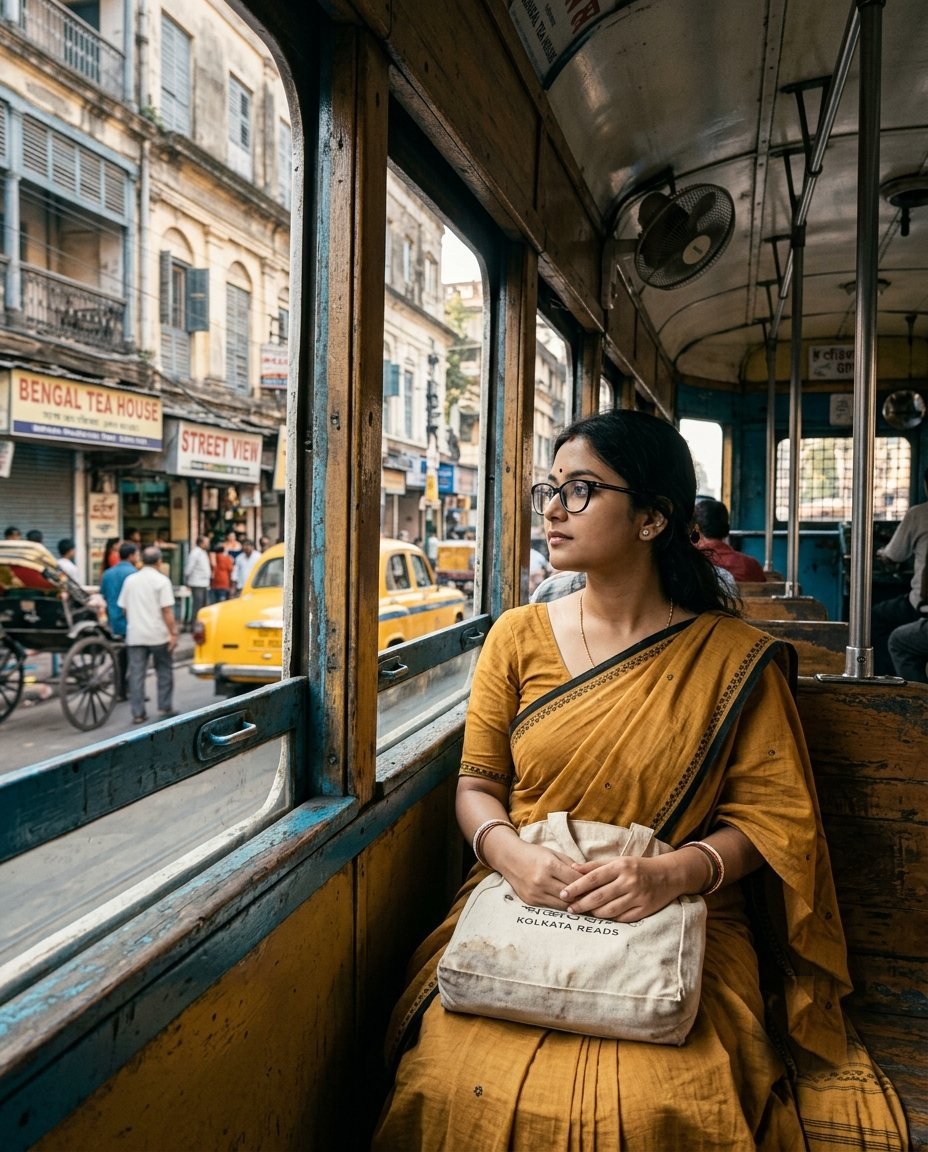
Using the uploaded photo as a character reference, recreate the woman seated beside the open window of a vintage Kolkata tram, wearing a mustard-yellow tant cotton saree with a thin black border and a crisp starched look, black-framed glasses and a cloth tote bag on her lap, looking out at the street. Soft morning light, the tram's wooden panelling and blue-and-yellow paint, a calm nostalgic mood, muted tones, photorealistic, keep the face 100% identical to the uploaded photo.
Tant is a light cotton, so the prompt asks for a "crisp starched look". Without it the fabric drapes like silk.
Everyday, heritage and bridal Bengali saree prompts
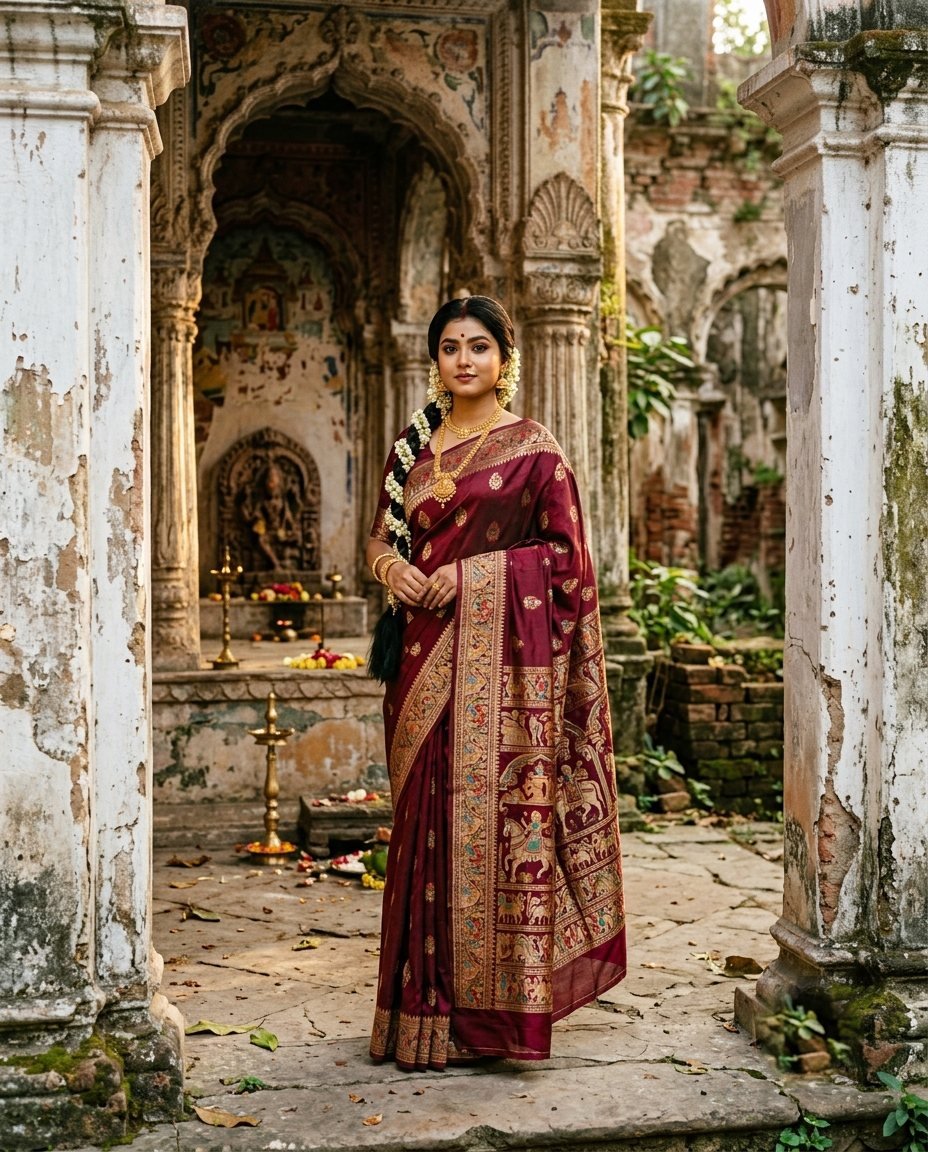
Using the uploaded photo as a character reference, recreate the woman standing between white pillars in the courtyard of a crumbling zamindar rajbari with a thakur dalan, wearing a deep maroon Baluchari silk saree with woven mythological scenes on the pallu, gold temple-style jewellery and a long braid with a gajra. A single shaft of late afternoon light, peeling plaster and moss on the arches behind her, a dignified timeless mood, photorealistic, keep the face 100% identical to the uploaded photo.
Baluchari is known for the story panels on the pallu. Name them, or the model weaves a plain pattern.
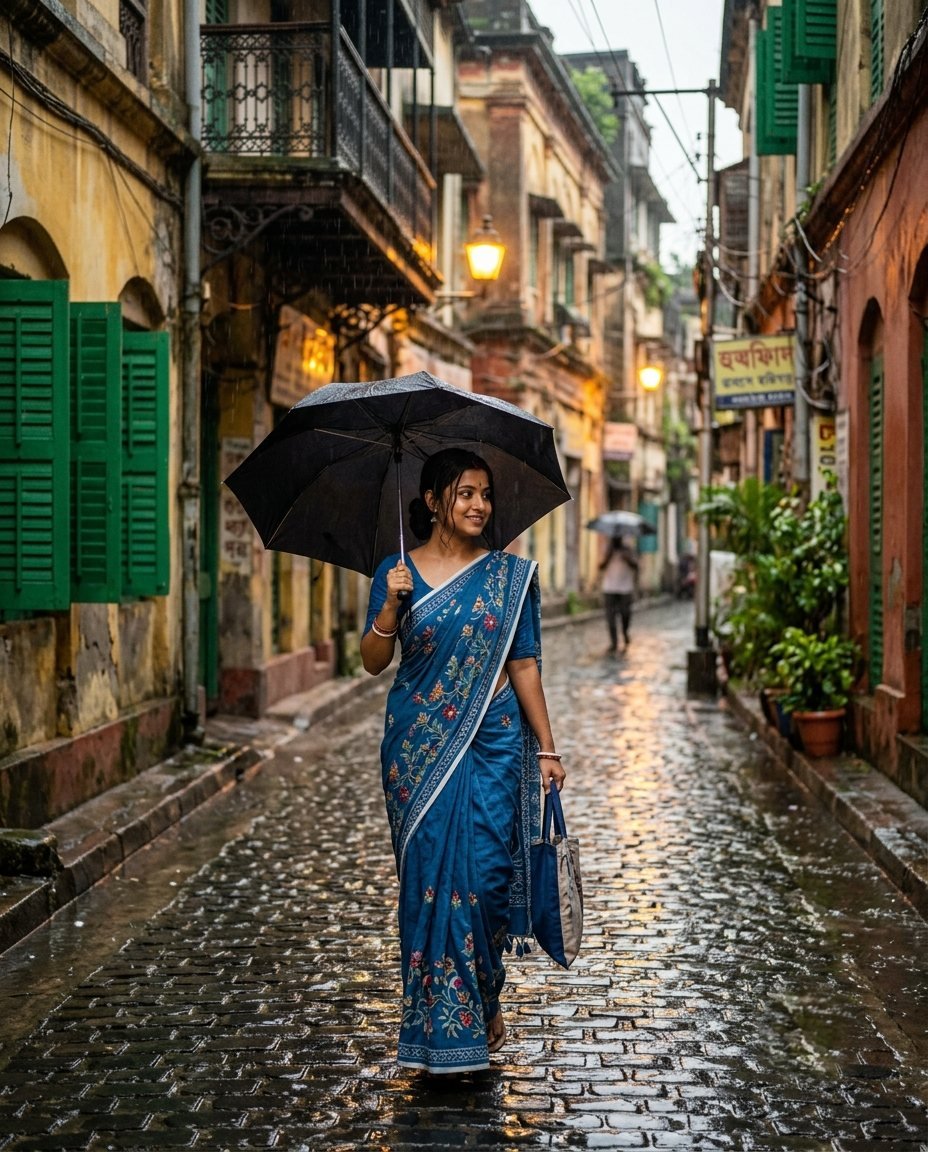
Using the uploaded photo as a character reference, recreate the woman walking down a narrow North Kolkata lane in the monsoon rain, holding a black umbrella, wearing a blue kantha-stitch cotton saree with a white border, wet cobbles reflecting yellow street lamps and old balconies with green shutters behind her, a few puddles, a quiet romantic mood, soft cool light, photorealistic, keep the face 100% identical to the uploaded photo.
Rain scenes tend to look the most cinematic. If the umbrella hides your face, add "umbrella tilted back so the face stays visible".
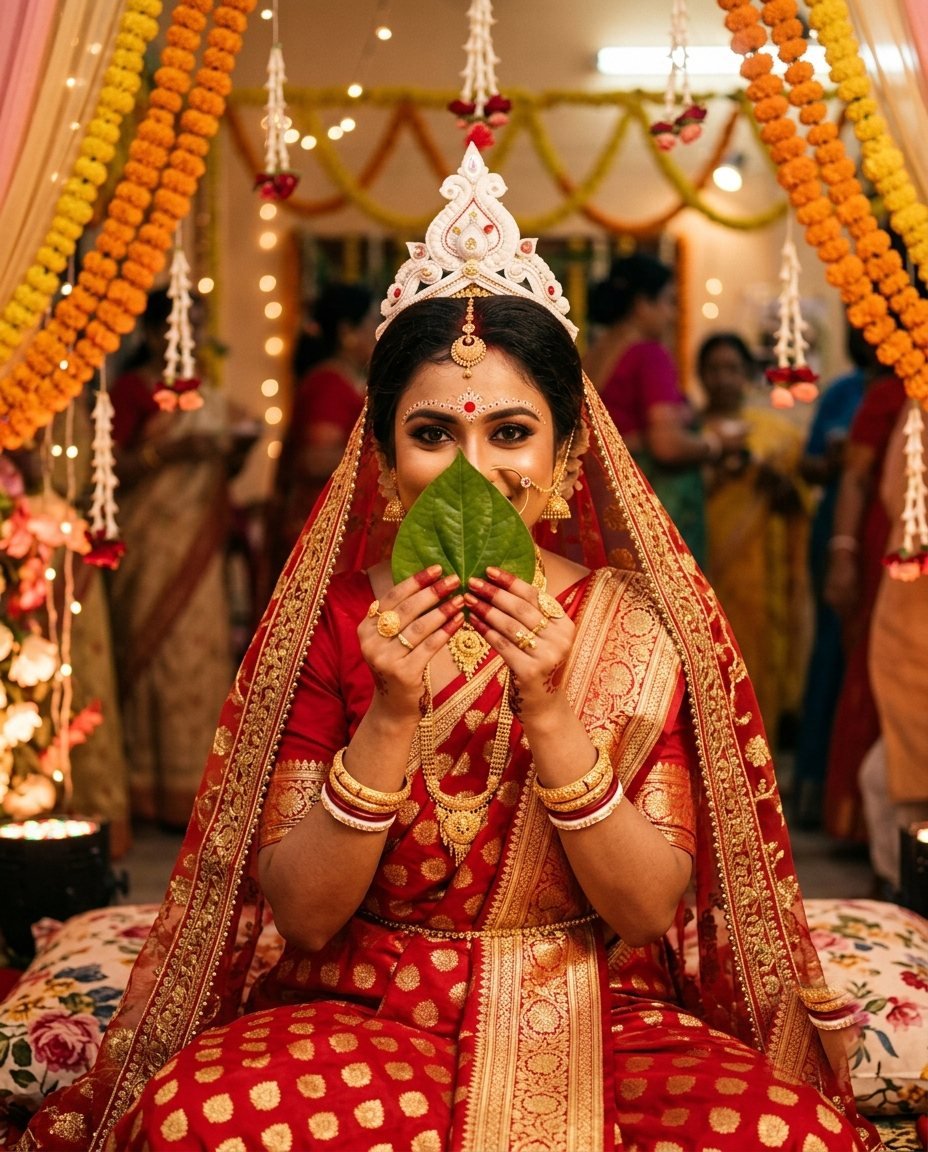
Using the uploaded photo as a character reference, recreate the woman seated as a Bengali bride during shubho drishti, wearing a red Banarasi saree with a gold border, a white sholapith topor crown, sandalwood paste dots across her forehead, a betel leaf held in front of her face with only her eyes visible above it, gold jewellery and a red-and-gold odhni over her head. Warm wedding-hall lighting, marigold garlands in the background, an intimate and emotional mood, photorealistic, keep the face 100% identical to the uploaded photo.
The betel leaf covers most of the face, which makes the likeness harder to judge. For a clearer portrait, remove that clause.
Why Bengali saree prompts usually go wrong
Four mistakes cause nearly every bad result:
- Asking for "an Indian saree". The model picks the most common drape, which is rarely Bengali. Say "Bengali drape" and describe the pallu over the left shoulder.
- Leaving out the border. The broad red border (laal paar) on white is the signature. Without it you get a plain cotton saree.
- Skipping the small details. Keys at the pallu end, shankha-pola bangles and a round bindi are what make the image feel Bengali and not generic.
- Dropping the face-lock line. Without the closing sentence the model smooths the skin and reshapes the face. Keep it in every prompt.
Frequently asked questions
What is the Bengali style of draping a saree?
The saree is wrapped around the waist, pleated at the front, and the pallu is brought over the left shoulder, often with a bunch of keys tied to the end. The pallu is usually kept wide and loose. The prompts above describe this so the model does not substitute another regional drape.
Can I use these Bengali saree prompts without sindoor or shankha-pola?
Yes. Those are traditional symbols for married women, so delete them from the prompt if they do not apply to you. The white-and-red saree, the drape and the flowers in the hair still make the look recognisably Bengali.
Do these work in ChatGPT as well as Gemini?
Yes. Both accept an uploaded reference photo and respond to the same descriptive structure. Gemini tends to hold facial likeness slightly better, while ChatGPT follows border and fabric details more literally.
Which of these Bengali saree prompts is best for Instagram?
The Laal Paar Pandal at Dusk and the Monsoon Lane in Kantha perform best. Both have strong colour contrast that reads clearly at thumbnail size. Use the 4:5 ratio so the post fills the feed.