Childhood photo prompts split into two very different jobs, and mixing them up is why people get disappointing results. Restoring a real photo means repairing what exists. Recreating a memory means generating something that never was photographed. Both are useful. They need completely different prompts, and only one of them produces an actual record of your life.
This page keeps them separate. Restoration prompts first, recreation prompts second, and an honest note at the end about what the difference means when you post these.
Which one do you actually want?
| You have | You want | Use |
|---|---|---|
| A real childhood photo, damaged | The same photo, repaired | Restoration section |
| A real childhood photo, fine | A restyled version | Era and style section |
| No photo of that moment | An image of how it was | Recreation section |
| A childhood photo and a current one | Both selves together | Adult-and-child-self section |
Restoring real childhood photos
These repair what is already in the image without inventing new content. For heavily damaged prints, run the dedicated photo restoration prompts first and come back here for the styling.
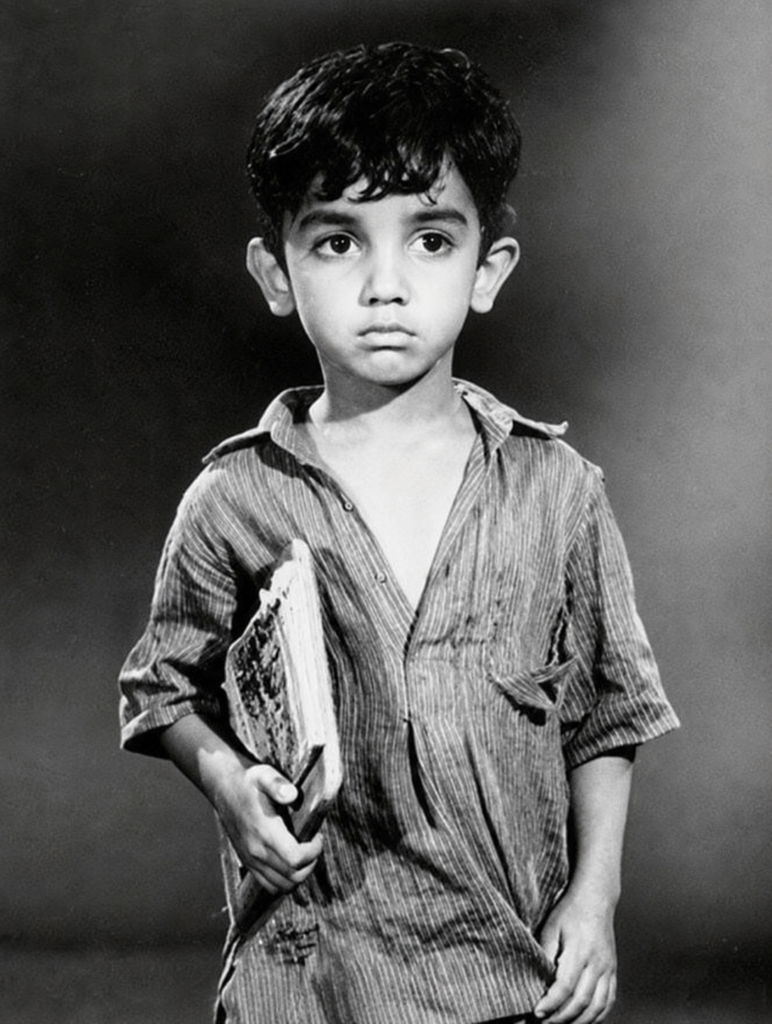
Restore the uploaded childhood photograph. Repair fading, colour cast, scratches, dust, creases and torn edges while keeping the original grain and photographic character intact. Recover natural skin tones and true clothing colours appropriate to the era. Do not change anyone's pose, expression, position, facial features or the composition, and do not add or remove any person or object. Do not smooth skin or sharpen beyond what the original detail supports. Preserve every person's identity, facial structure and real age exactly as in the original. No invented faces for blurred or out-of-focus figures, no modern clothing details, no added text or dates. Aspect ratio matching the original.
Best for: the family album scan. Aspect ratio: match the original. Customisation tip: the instruction not to invent faces for blurred figures matters — that is where restoration quietly becomes fabrication.
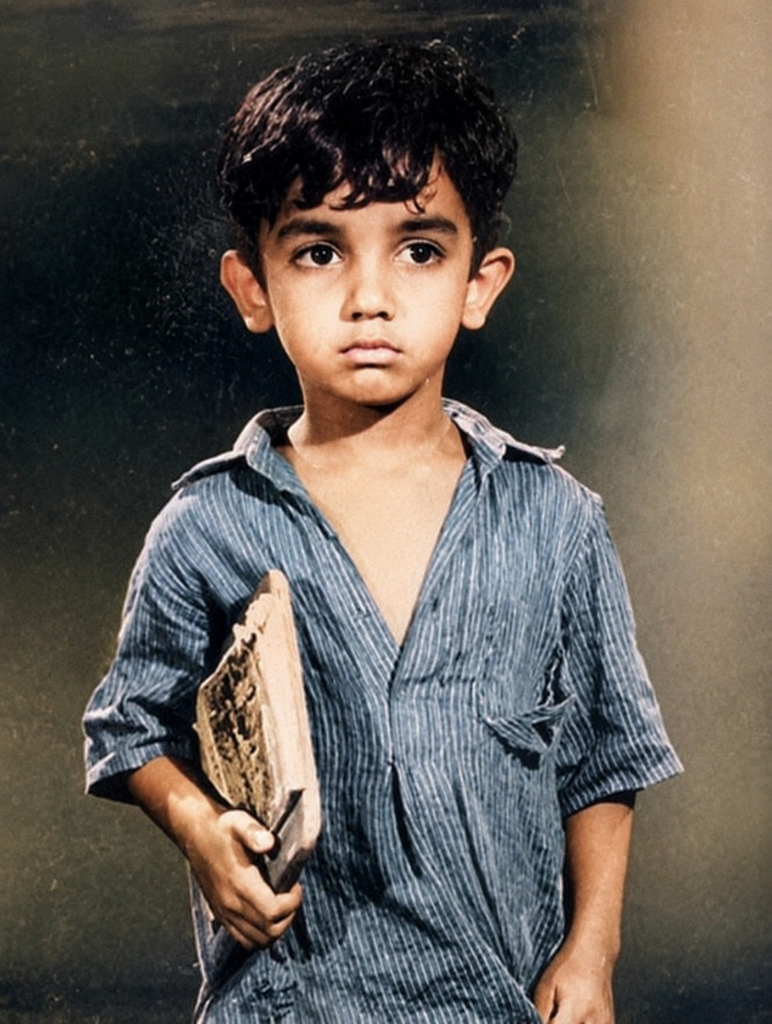
Add colour to the uploaded black and white childhood photograph. Infer period-accurate colours for skin, clothing, walls, furniture and surroundings based on the visible materials and the era of the photograph. Keep the colour muted and natural in the style of period film stock, not saturated modern grading. Preserve the original grain, contrast and composition. Do not change poses, expressions, features or the number of people. Preserve every person's identity, facial structure, real age and skin texture exactly as in the original. No smoothing, no invented detail in blurred areas, no added text. Aspect ratio matching the original.
Best for: pre-1990s photos. Aspect ratio: match the original. Customisation tip: tell it the decade — the palette changes noticeably between the 60s, 70s and 80s.
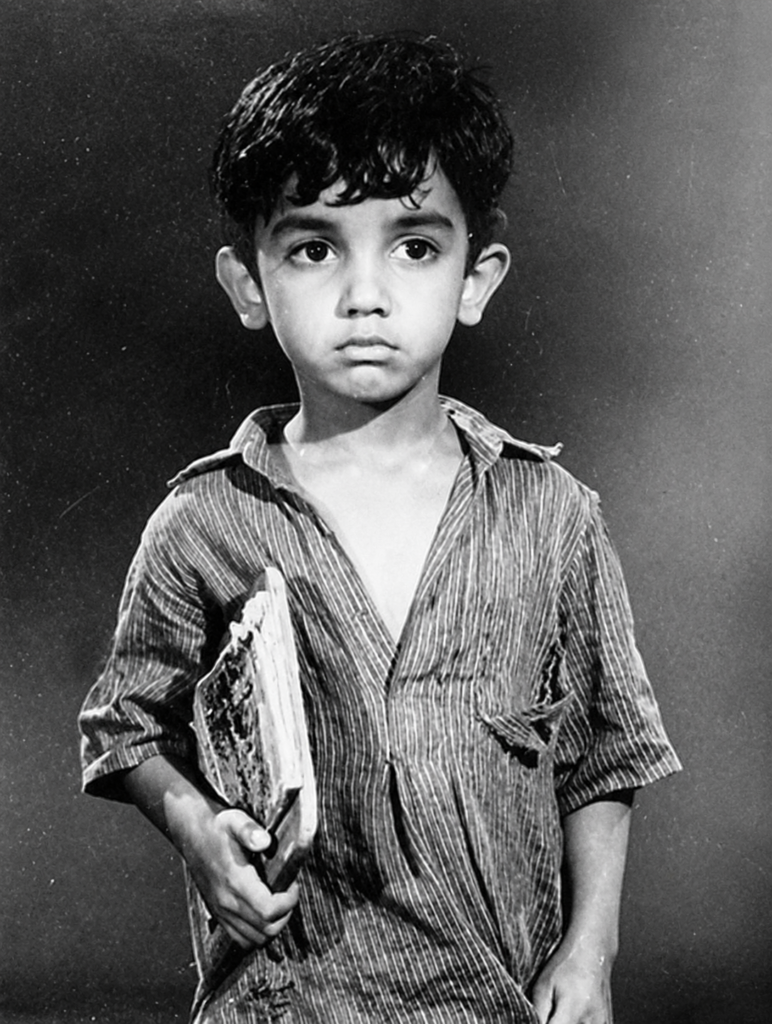
Improve the clarity of the uploaded blurry childhood photograph. Reduce motion blur, focus softness and compression artefacts while keeping the result consistent with the detail actually present in the original. Do not invent facial detail that is not visible in the source, and do not replace a soft face with a sharp generated one. Keep the original composition, poses, expressions and colour character. Preserve every person's identity, facial structure and real age exactly as in the original. No added detail in areas that are entirely blurred, no smoothing, no modern retouching look, no added text. Aspect ratio matching the original.
Best for: soft or shaky photos from film cameras. Aspect ratio: match the original. Customisation tip: a truly blurred face cannot be recovered — anything sharp that comes back is invented.
Recreating childhood memories
These generate scenes that were never photographed, using a real childhood photo as the identity reference. They are interpretations. Useful, often moving, but not records.
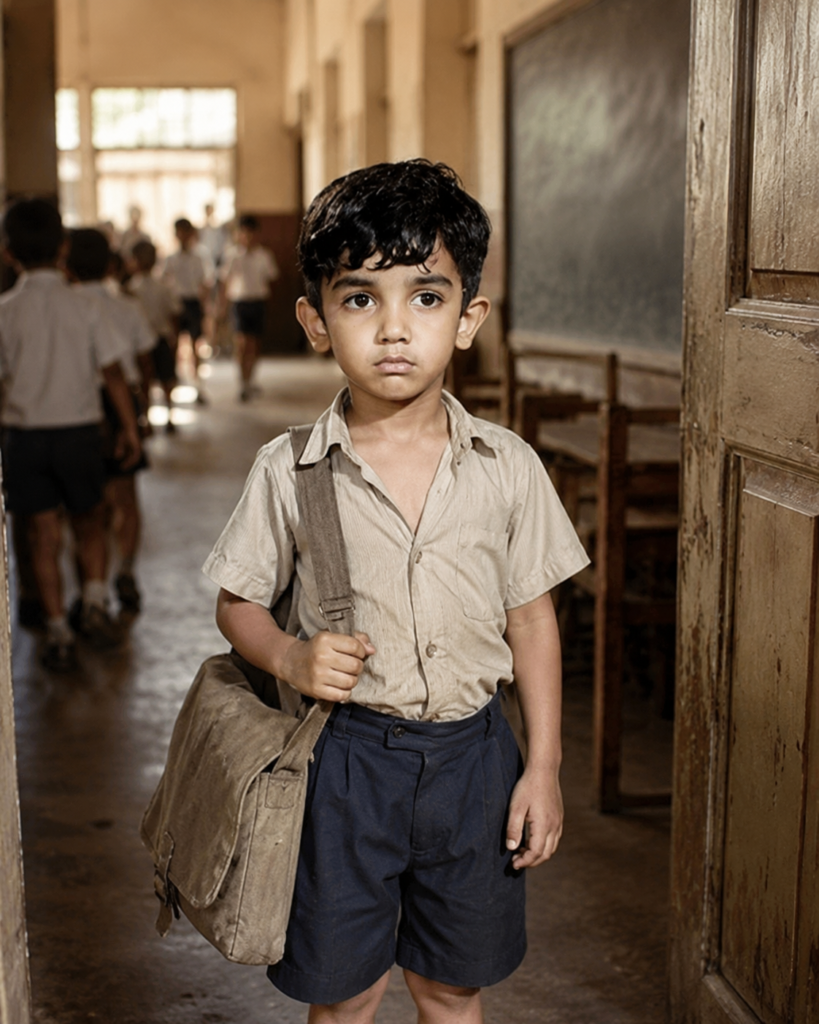
Using the uploaded childhood photo as the identity reference, create a scene of the same child at school — standing in a classroom doorway with a satchel, uniform slightly untidy, other children blurred in the corridor behind. Warm morning light through high windows, worn wooden desks and a blackboard visible inside. Period-appropriate uniform and bag for the era stated. Slightly nervous expression, not posed. Documentary photography of the period, natural colour with mild fading, film grain. Keep the uniform and blackboard free of readable text. Preserve the child's exact identity, facial structure, real age, skin tone and hairstyle from the reference photo. No duplicate children, no extra limbs, no aged-up child, no readable text. Aspect ratio 4:5.
Best for: school-memory posts. Aspect ratio: 4:5. Customisation tip: name the decade and the country so the uniform and classroom are right.
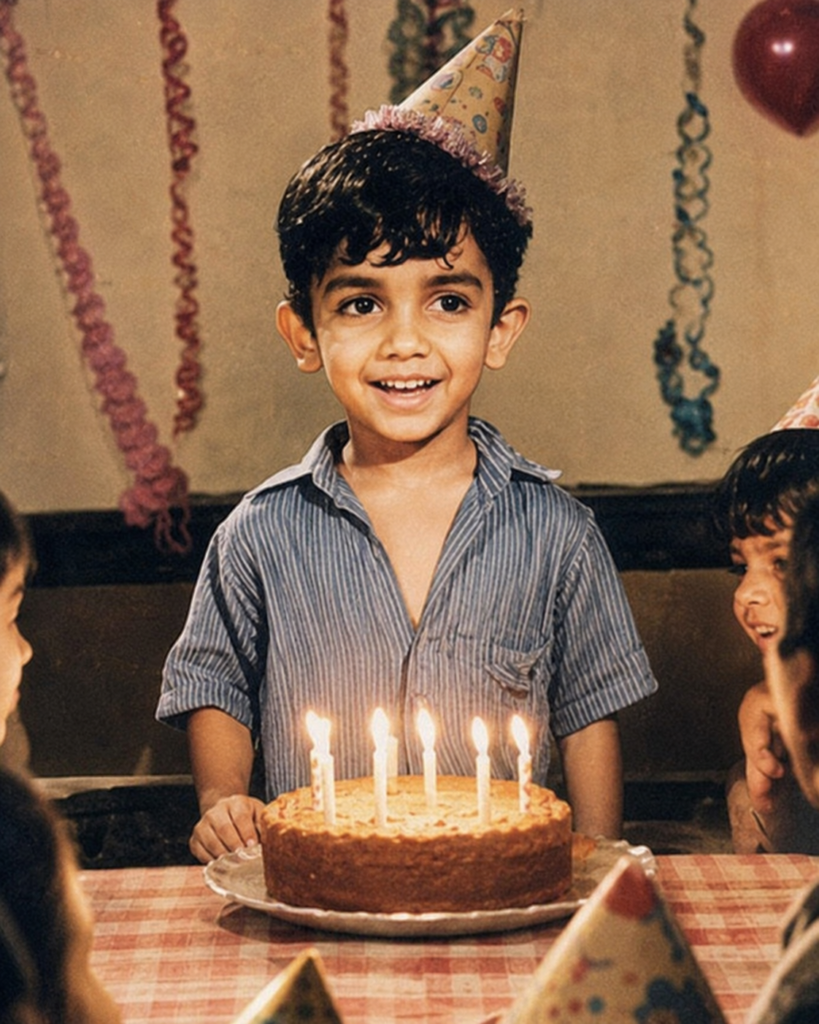
Using the uploaded childhood photo as the identity reference, recreate the same child at a birthday party at home — standing behind a simple homemade cake with lit candles, party hat slightly crooked, other children around the table blurred at the edges. Warm indoor light with the candles glowing on the child's face, paper decorations and streamers behind. Period-appropriate clothing and decorations for the era stated. Genuine delighted expression, mid-moment. Warm slightly faded colour, film grain. Leave the cake plain with no writing or numbers. Preserve the child's exact identity, facial structure, real age, skin tone and hairstyle from the reference. No duplicate children, no extra hands, no aged-up child, no writing on the cake. Aspect ratio 4:5.
Best for: birthday nostalgia content. Aspect ratio: 4:5. Customisation tip: homemade rather than professional cake reads as period-accurate for most Indian childhoods.
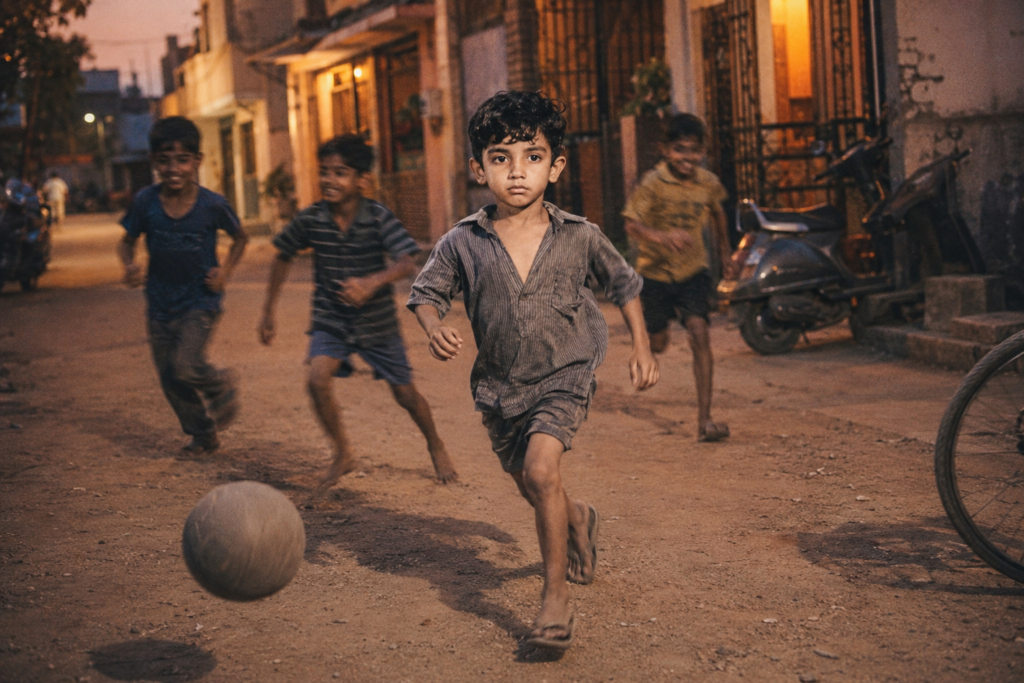
Using the uploaded childhood photo as the identity reference, create a scene of the same child playing outdoors in a residential lane at dusk — running with other children blurred around, a ball or bicycle in the scene, house lights just coming on. Warm low light with long shadows, dust in the air, ordinary 1990s Indian neighbourhood with parked scooters and open gates. Scuffed play clothes, bare feet or sandals. Movement caught mid-action, no camera awareness. Warm faded colour, visible grain, documentary framing at 35mm. Preserve the child's exact identity, facial structure, real age, skin tone and hairstyle from the reference. No duplicate children, no extra limbs, no aged-up child, no readable signage. Aspect ratio 3:2.
Best for: the strongest nostalgia format for Indian audiences. Aspect ratio: 3:2. Customisation tip: the specific neighbourhood details do more than any filter.
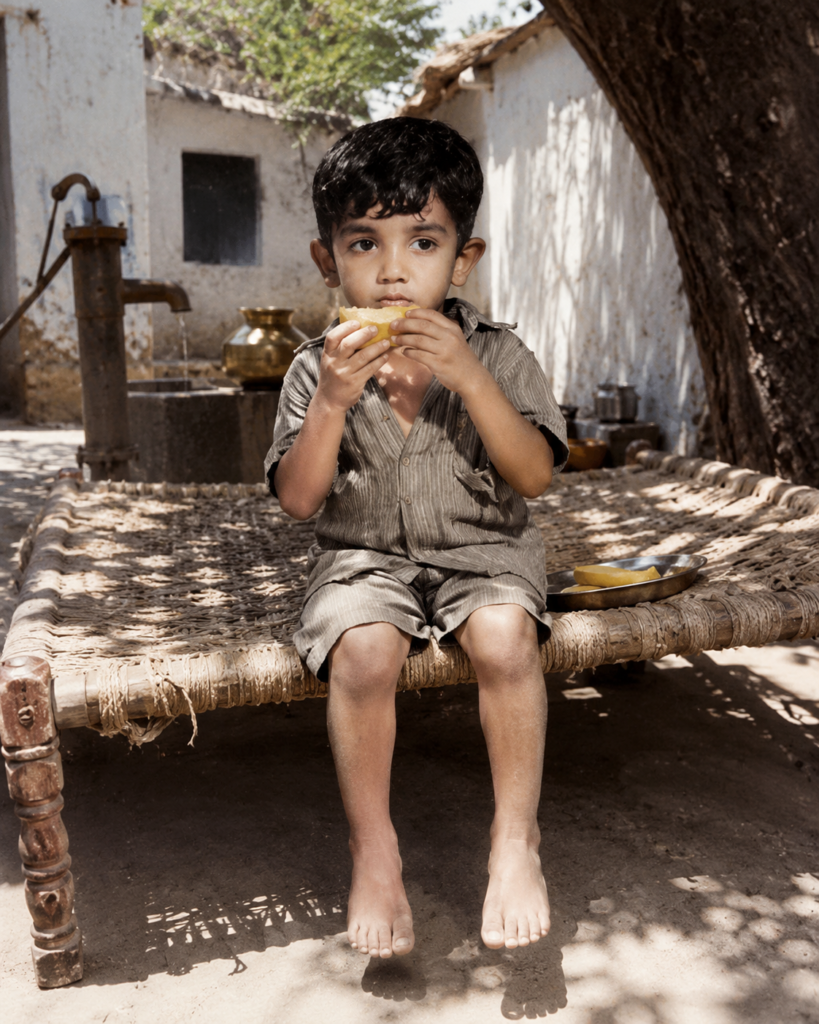
Using the uploaded childhood photo as the identity reference, recreate the same child at a grandparents' home during summer holidays — sitting on a charpai in a courtyard, eating a mango, feet not reaching the ground. Bright harsh afternoon light with deep shade under a tree, whitewashed walls, brass vessels and a hand pump visible. Simple cotton clothes, hair damp from the heat. Completely unposed, absorbed in the mango. Warm high-contrast colour, mild fading, film grain. Preserve the child's exact identity, facial structure, real age, skin tone and hairstyle from the reference. No duplicate children, no extra hands, no aged-up child, no plastic-looking fruit. Aspect ratio 4:5.
Best for: a highly specific, widely shared memory. Aspect ratio: 4:5. Customisation tip: feet not reaching the ground is the detail that makes it read as childhood.
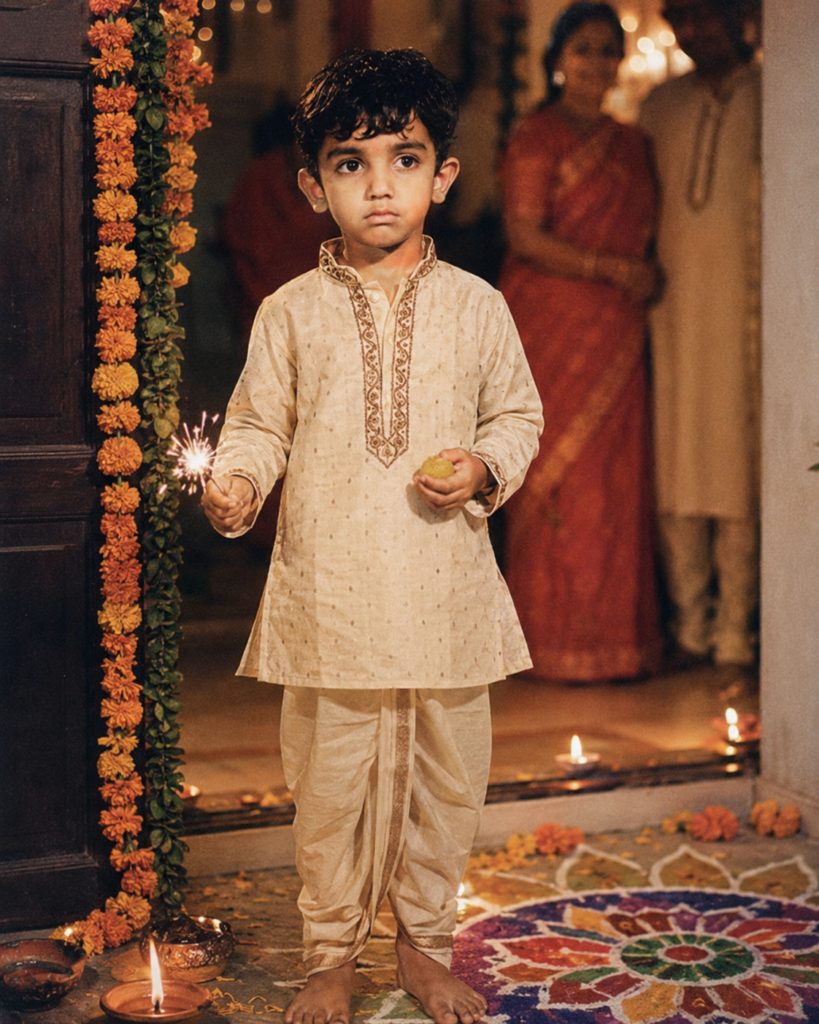
Using the uploaded childhood photo as the identity reference, create a scene of the same child on a festival morning at home — dressed in new traditional clothes, holding a small sweet or a sparkler, standing near a decorated doorway with a rangoli on the floor. Warm early light, marigold garlands and oil lamps, family members blurred in the background. Slightly stiff proud posture in the new clothes. Rich warm colour with mild period fading, film grain. Preserve the child's exact identity, facial structure, real age, skin tone and hairstyle from the reference. No duplicate children, no extra hands, no aged-up child, no floating flames, no readable text on decorations. Aspect ratio 4:5.
Best for: festival-season nostalgia. Aspect ratio: 4:5. Customisation tip: the stiff posture in new clothes is a small, very recognisable detail.
With parents and siblings
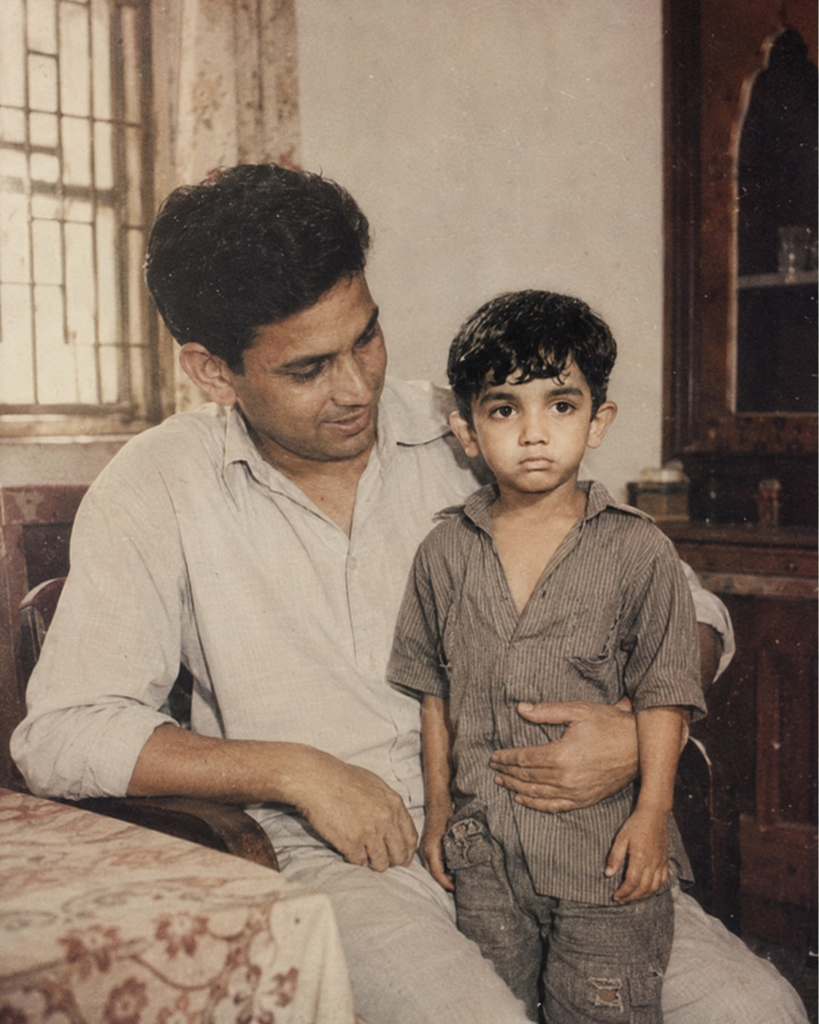
Using the two uploaded reference photos — one of the child and one of the parent at the corresponding age — create a scene of them together during that period. The parent holding or standing beside the child in an ordinary home setting, both dressed appropriately for the stated era. Warm natural light from a window, simple period-accurate furniture. Genuine relaxed interaction, not formally posed. Photographic style of the era, mild fading, visible grain. Preserve the child's identity, facial structure and real childhood age from the child reference, and the parent's identity, facial structure and age from the parent reference. Do not blend their faces or average their ages. No duplicate people, no extra limbs, no fused hands, no aged-up child. Aspect ratio 4:5.
Best for: photos that were never taken. Aspect ratio: 4:5. Customisation tip: you need a photo of the parent from roughly the right era, or the ages will not match.
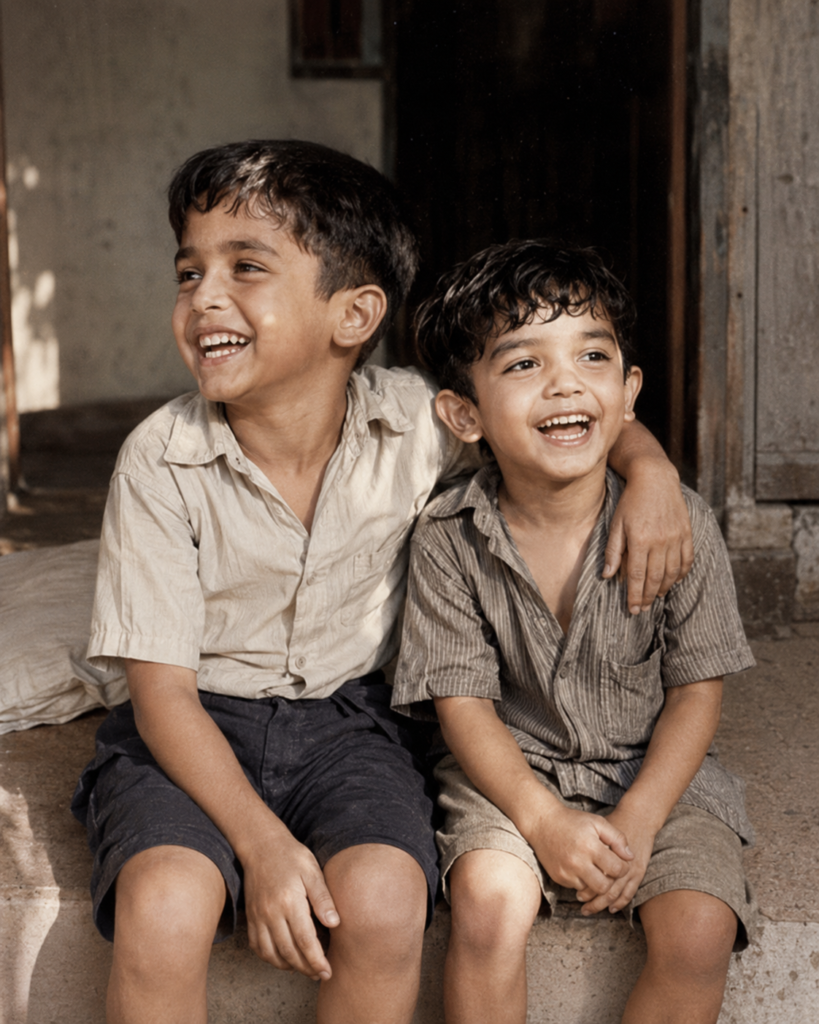
Using the uploaded reference photos of both siblings as children, create a scene of them together at that age — sitting side by side on a doorstep or bed, the elder with an arm around the younger. Ordinary home setting, period-appropriate clothing, warm afternoon light. Both mid-laugh at something off-camera, unposed. Photographic style of the stated era, mild fading, film grain. Preserve each child's exact identity, facial structure, real age, height difference, skin tone and hairstyle from their own reference photo, keeping their faces clearly distinct from each other. No duplicate children, no invented siblings, no extra limbs, no fused hands, no twin-like faces, no aged-up children. Aspect ratio 4:5.
Best for: siblings with few shared childhood photos. Aspect ratio: 4:5. Customisation tip: more sibling framing in the brother and sister prompts.
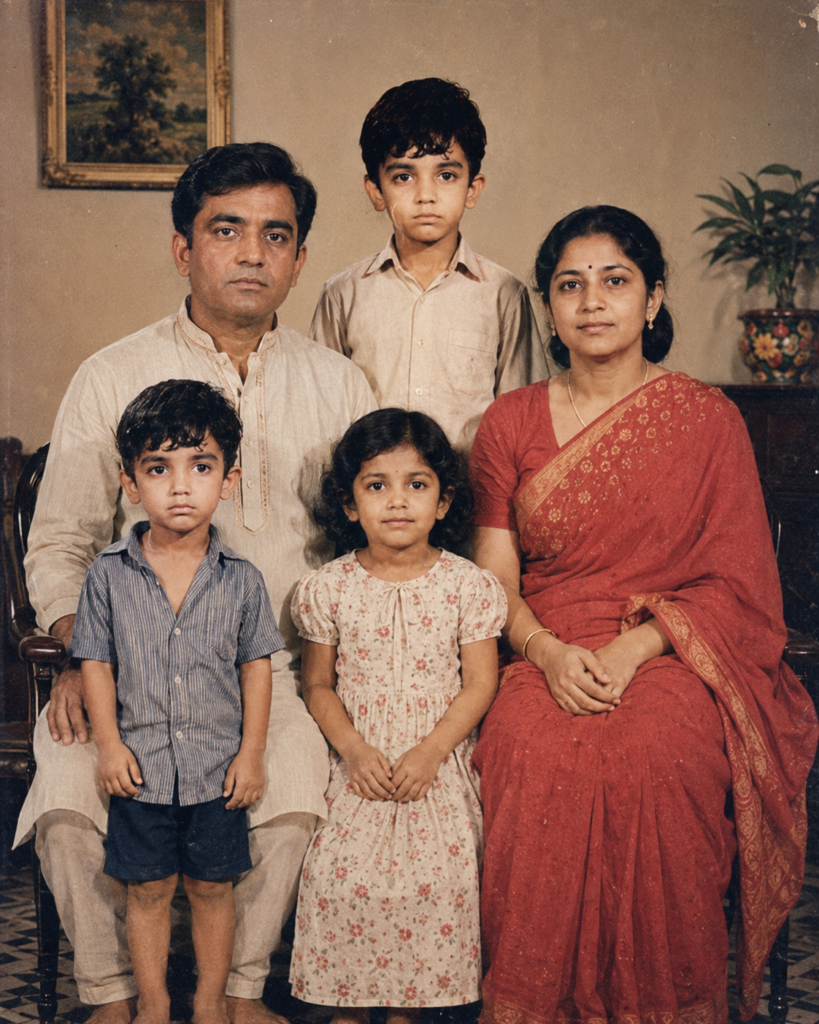
Using the uploaded reference photos, create a family portrait as it would have looked during the stated era — the same family members at their ages in that period, arranged formally in a home setting. Parents seated or standing centre, children in front, everyone facing the camera. Period-appropriate clothing, furniture and decor. Even indoor light from a window or a flash of the era. Slightly stiff formal posture typical of family portraits of the time. Photographic style of that decade, mild fading, grain, soft corners. Preserve each person's identity and facial structure from their own reference, at their correct age for that period. Do not average anyone's age. No duplicate people, no invented family members, no extra limbs, no fused hands. Aspect ratio 4:5.
Best for: families with a gap in their photo record. Aspect ratio: 4:5. Customisation tip: use the family photo hub for the multi-person arrangement rules.
Adult beside their childhood self
The most-shared format on this page and the one most likely to fail, because the model wants to average the two faces into one person of middle age. State both ages explicitly and forbid blending.
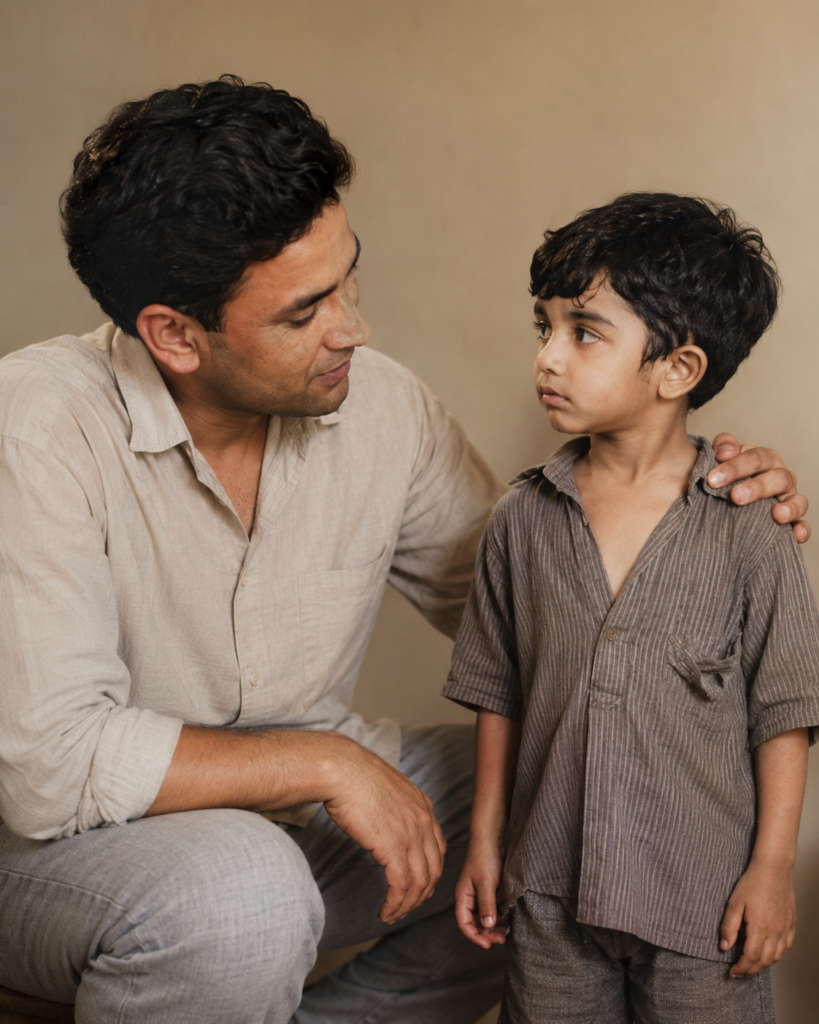
Using the two uploaded photos — one of the person as a child and one as they are now — create a single image of them together, the adult crouched down at eye level with the child, both looking at each other. Soft neutral studio-like light, plain warm background, simple clothing appropriate to each of their eras. Calm gentle expressions, one hand from the adult resting on the child's shoulder. Sharp on both faces, 85mm, natural colour. Preserve the child's exact identity, facial structure and real childhood age from the child photo, and the adult's exact identity, facial structure and real present age from the recent photo. Do not blend the two faces or average their ages — they must read as clearly the same person at two distinct ages. No duplicate people, no extra limbs, no fused hands, no age drift. Aspect ratio 4:5.
Best for: the highest-engagement version of this format. Aspect ratio: 4:5. Customisation tip: crouching to eye level is what makes the composition work emotionally.
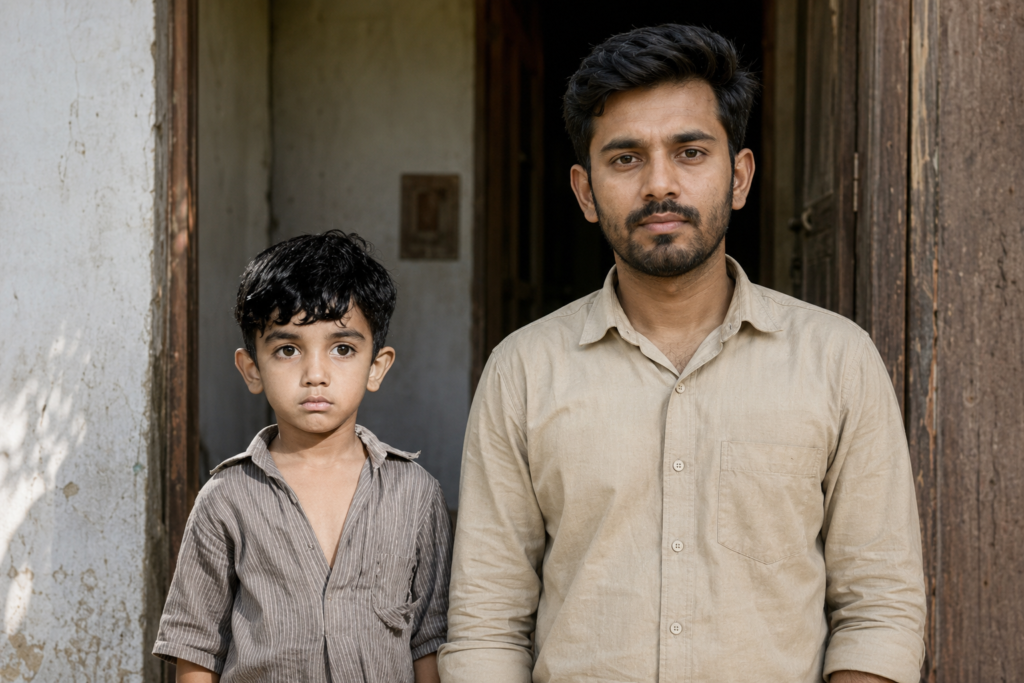
Using the two uploaded photos, create an image of the same person as a child and as an adult standing side by side in the same location — a home doorway, a school gate or a street — the child on the left and the adult on the right. Matching light and camera angle across both figures, present-day setting with visible signs of age and change. Both facing the camera with similar expressions. Sharp on both faces, 35mm, natural colour. Preserve the child's identity, facial structure and real childhood age from the child photo, and the adult's identity, facial structure and present age from the recent photo. Do not blend the faces or average the ages. No duplicate people, no extra limbs, no fused hands, no floating figures, no mismatched shadows. Aspect ratio 3:2.
Best for: then-and-now posts with a real location. Aspect ratio: 3:2. Customisation tip: matched shadows on both figures is what stops it looking pasted together.

Using the two uploaded photos — an original childhood photograph and a current photo of the same person — recreate the original composition with the person at their present age. Match the original pose, position, framing, background and colour character as closely as possible, adapted naturally for adult size and proportions. Present-day photographic quality, clothing echoing the original in colour and style. Preserve the person's current identity, facial structure, real present age, skin tone and hairstyle from the recent photo. Do not blend the childhood face into the adult face. No duplicate people, no extra limbs, no fused hands, no de-aging, no age inconsistency. Aspect ratio matching the original photograph.
Best for: a side-by-side pair with the original. Aspect ratio: match the original. Customisation tip: post it beside the real childhood photo rather than alone.
Era and style treatments
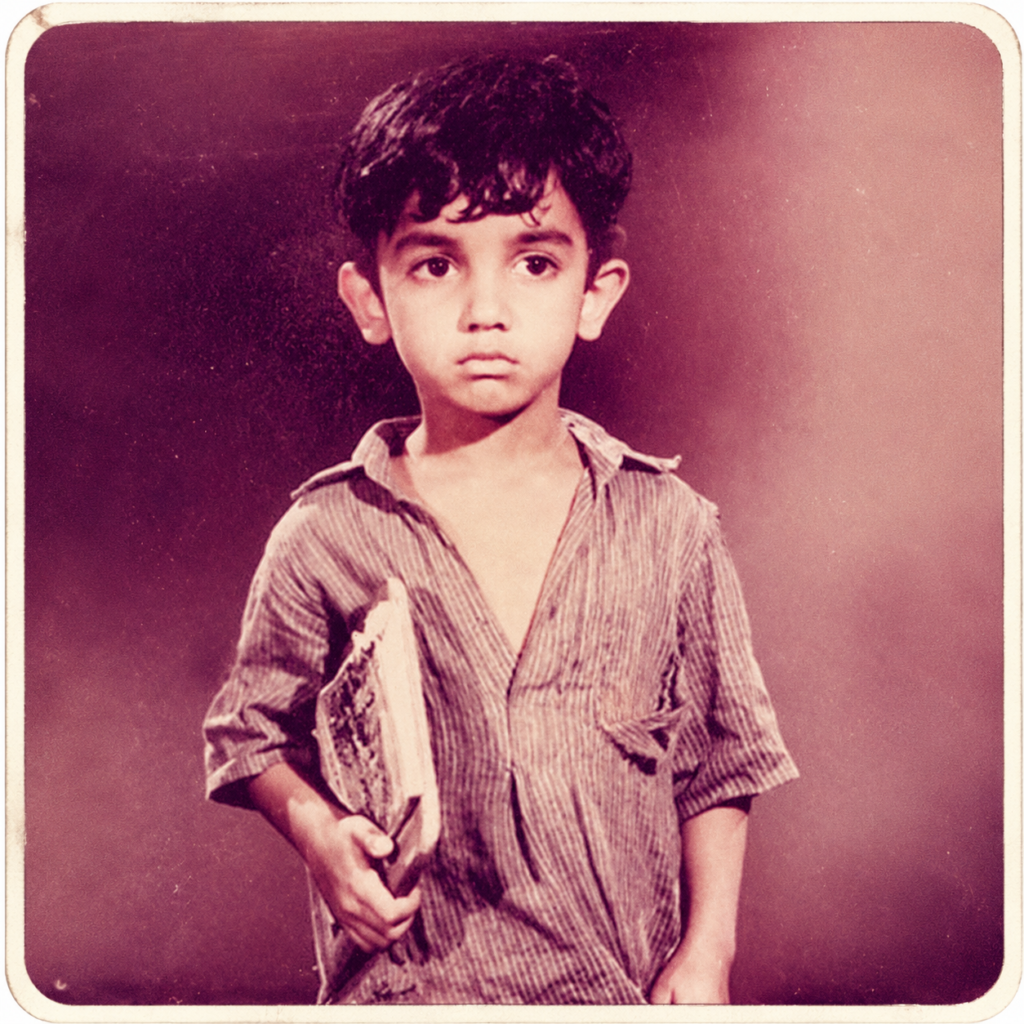
Restyle the uploaded childhood photo as a 1990s Indian family photograph. Slightly warm faded colour with a magenta shift in the highlights, soft contrast, visible grain, rounded corners and a thin white border. Colour character of consumer film of the period, mild overexposure from a built-in flash. Change only the photographic treatment and colour, not the child's face, age, clothing shape, pose or the composition. Preserve the child's exact identity, facial structure, real age, skin tone and hairstyle from the original. No duplicate people, no extra limbs, no fake handwritten dates or text on the border, no aged-up child. Aspect ratio 1:1.
Best for: matching the look of your real album. Aspect ratio: 1:1. Customisation tip: the magenta highlight shift is specific to 90s consumer film and reads instantly.
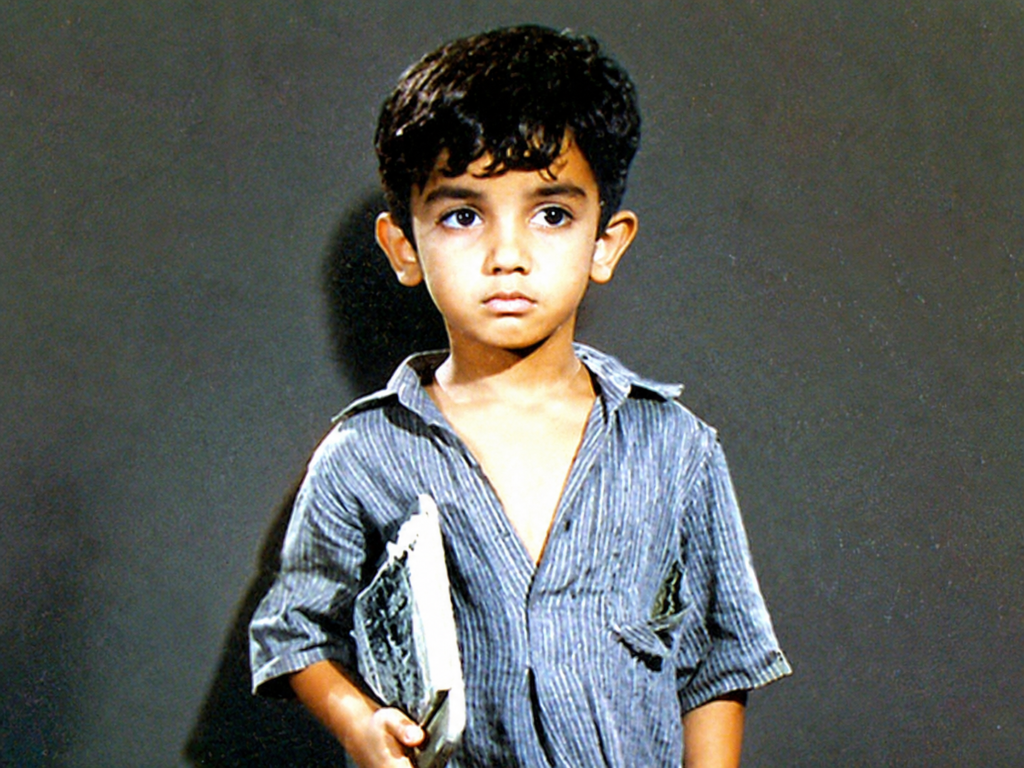
Restyle the uploaded childhood photo as an early-2000s digital camera image. Slightly soft focus, harsh built-in flash, mild oversaturation, low dynamic range with blown highlights and blocked shadows, faint digital noise in the shadows. Change only the photographic treatment, not the child's face, age, clothing, pose or composition. Preserve the child's exact identity, facial structure, real age, skin tone and hairstyle from the original. No duplicate people, no extra limbs, no timestamps or text, no aged-up child, no smoothed skin. Aspect ratio 4:3.
Best for: childhoods that fall after film and before smartphones. Aspect ratio: 4:3. Customisation tip: ban timestamps; generated ones are always the wrong date.
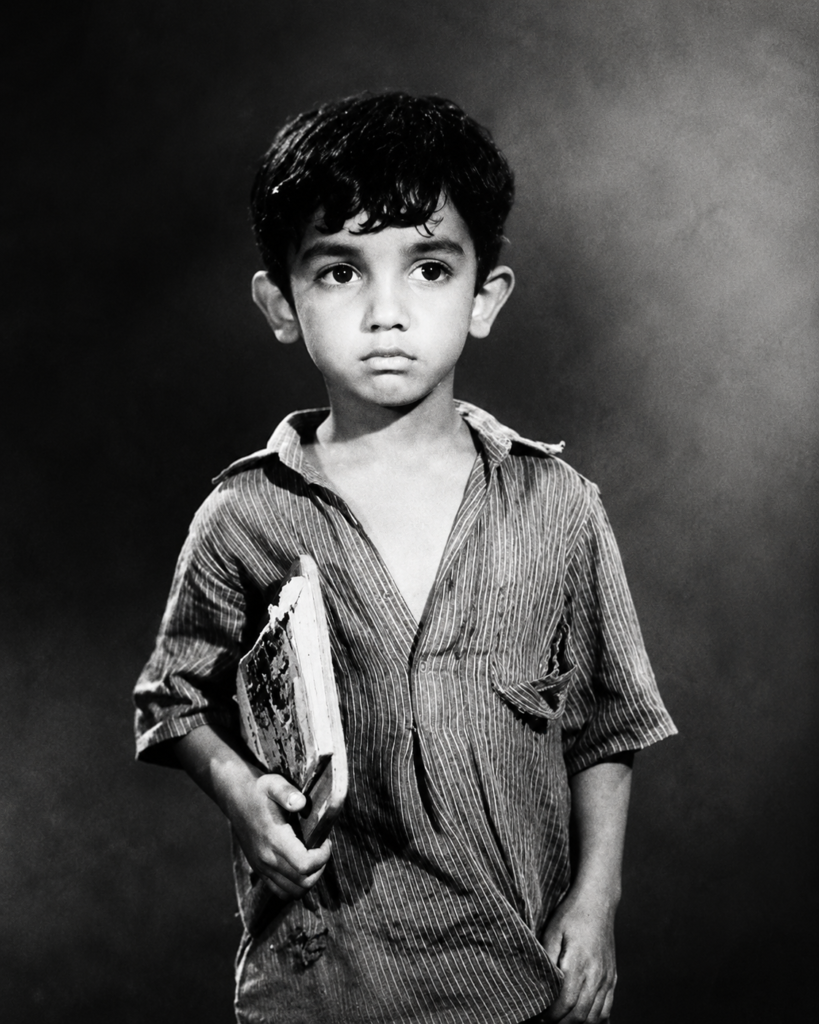
Convert the uploaded childhood photo into a fine-art black and white portrait. Soft directional light with gentle shadow falloff, bright catchlights in the eyes, deep but detailed shadows. High dynamic range monochrome, fine visible grain, timeless documentary quality. Keep the original pose, expression and composition, changing only the treatment. Preserve the child's exact identity, facial structure, real age and natural skin texture from the original — do not smooth or beautify. No duplicate people, no extra limbs, no crushed featureless shadows, no aged-up child, no added text. Aspect ratio 4:5.
Best for: printing and framing. Aspect ratio: 4:5. Customisation tip: monochrome hides colour damage in old prints, so it doubles as a repair strategy.
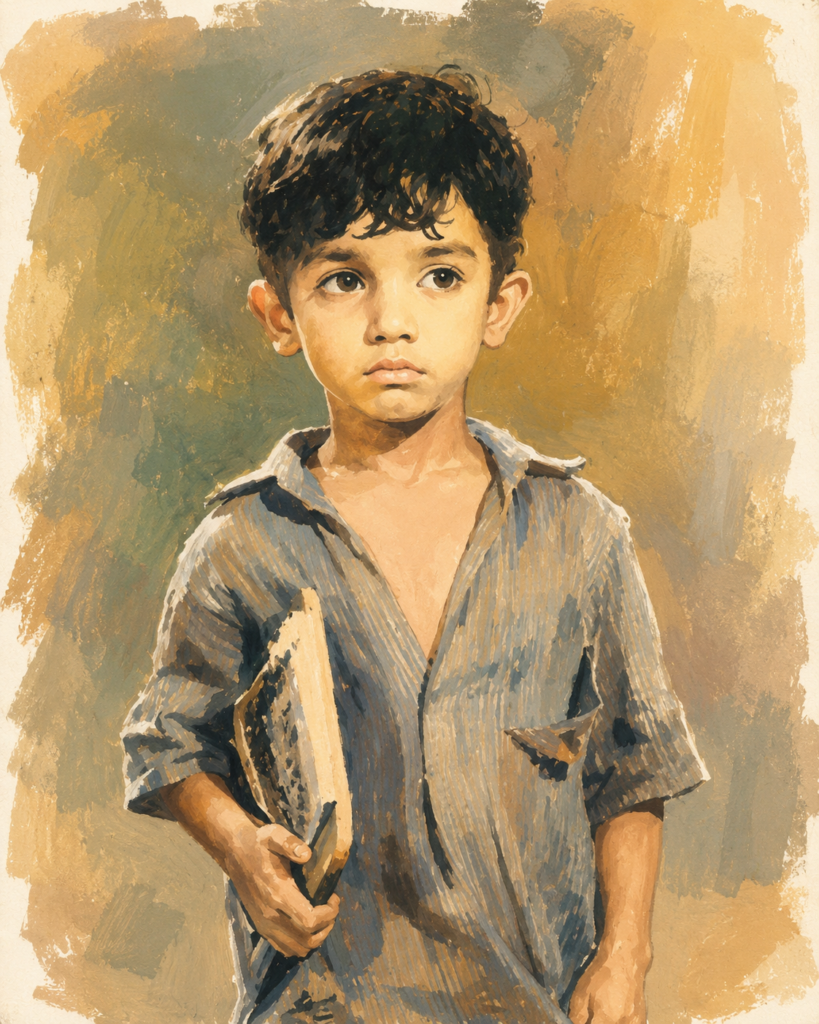
Transform the uploaded childhood photo into a hand-painted storybook illustration. Soft gouache texture on paper, warm muted palette, simplified shapes with loose visible brushwork, gentle light. The child clearly recognisable by facial structure, hairstyle and clothing colour but rendered illustratively rather than photographically. Simple background suggesting the setting without detail. Keep the child's identity, real age and proportions recognisable from the reference. No duplicate people, no extra limbs, no photographic realism, no signature, no text or lettering anywhere. Aspect ratio 4:5.
Best for: gifts and nursery prints. Aspect ratio: 4:5. Customisation tip: illustration is the honest option when the source photo is too damaged to restore.
Reusable template
Fill the bracketed fields and you have a working prompt for any childhood memory not covered above.
Using the uploaded childhood photo as the identity reference, create a scene of the same child [AGE] years old in [YEAR/DECADE], [DOING WHAT] at [LOCATION]. [CLOTHING appropriate to era]. [LIGHT: time of day and direction]. [TWO OR THREE PERIOD DETAILS in the background]. Unposed, [EXPRESSION]. Photographic style of the era, mild fading, visible grain, [LENS] framing.

Preserve the child's exact identity, facial structure, real age, skin tone and hairstyle from the reference photo. No duplicate children, no extra limbs, no fused hands, no aged-up child, no readable text. Aspect ratio [RATIO].
Customisation table
| Variable | Options to try |
|---|---|
| Era | 1970s, 1980s, 1990s, early 2000s |
| Setting | Home courtyard, school, residential lane, grandparents’ house, festival doorway |
| People | Child alone, with a parent, with siblings, whole family, with adult self |
| Treatment | Restored, colourised, period film, early digital, black and white, illustrated |
| Occasion | Birthday, festival, first day of school, summer holidays, ordinary day |
| Format | 4:5 feed, 1:1 grid, 4:3 digital era, 3:2 print |
Troubleshooting
- The child looks like a small adult. Add correct child head-to-body proportions for a child of X years. Older children are affected more than toddlers.
- The adult and child faces blended. State both ages as numbers and add do not blend the faces or average their ages.
- Restoration invented a face. The source was too blurred. Add no invented detail in blurred areas and accept the softness, or switch to the illustrated version.
- The era looks wrong. Name the decade and country, and list two or three concrete period objects rather than describing a general vibe.
- Colours look too modern. Ask for period film stock character and muted saturation explicitly.
- Text appeared on uniforms or signs. Ban all readable text in the prompt.
An honest note on recreated memories
A restored photo is still a photograph of something that happened. A recreated one is not, however convincing it looks and however accurately it matches your memory.
That distinction matters most within families, where these images get shared, saved and eventually passed on. An image of a grandparent holding you as a baby, generated because no such photo exists, can be genuinely valuable — and it can also end up in an album twenty years from now with nobody left who remembers it was made rather than taken. Say which it is when you share it.
Frequently asked questions
Can AI recover a face that is completely blurred?
No. It can generate a plausible face, which is a different thing. If the detail is not in the original, anything sharp that comes back is invented — that is fine for a stylised image and misleading in a restoration.
How many reference photos do I need?
One clear childhood photo for solo recreations. Two for adult-and-child-self images or for scenes with a parent — one per person, each from roughly the right era.
Which works better, Gemini or ChatGPT?
Gemini holds facial identity better across two ages of the same person, which matters for the recreation prompts. ChatGPT is stronger for the illustrated and storybook versions. See the ChatGPT photo prompt guide for the differences.
Why does the era look wrong even when I name the decade?
Decade alone is a weak signal. Name the country and two or three specific objects — a particular kind of chair, a hand pump, a school bag — and the setting corrects itself.
Can I do this for a childhood photo of a parent who has passed away?
Yes, and it is a common reason people use these prompts. Keep the identity lock strict so their real features are preserved, and be clear with family that the result is a recreation rather than a found photograph.
Next step
Decide which job you are doing before you write a prompt — repair or recreation. If it is repair, start with the restoration prompts and come back for styling. If it is recreation, use the template above and name the era properly. For scenes with family members from separate photos, the merging workflow is in combining separate family photos.